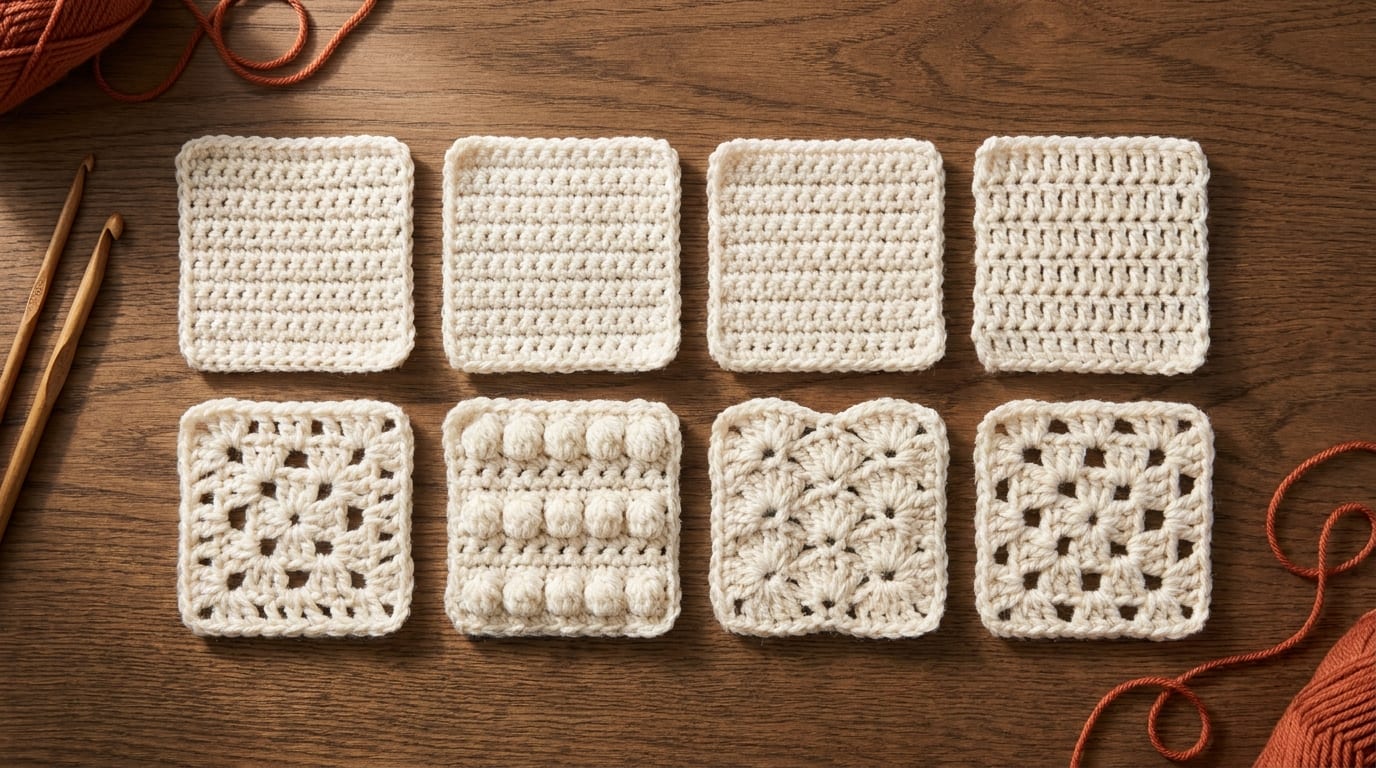
A small set of stitches, endlessly combined
Open almost any pattern and the crochet stitches look dense on the page: sc, dc, hdc, ch, repeated in long strings with numbers in between. It reads like code. It is not. Nearly every crochet pattern ever written is built from a small handful of stitches, and once you can name those families, most patterns stop being a puzzle and start being a recipe. There are only a few crochet stitches doing the heavy lifting, and the rest are variations on them.
That is the idea behind this library. Think of it as a map of the common crochet stitches, grouped so the relationships make sense. We will start with how stitches are named, since the US and UK use the same words for different things and that single fact trips up more beginners than any technique ever does. Then we walk through the foundation stitches that carry your weight in most projects, then the textured and decorative ones that give a piece its character.
Each stitch here gets a plain definition and a note on its height and typical use. Where there is a full step-by-step page in our reference section, you will find a link to it. This page is the overview. The detailed how-to lives one click away.
How crochet stitches are named (US vs UK)
Crochet has two naming systems that use the same words to mean different stitches. This is the most common reason a beginner pattern comes out wrong.
A US single crochet is the same physical stitch as a UK double crochet. A US double crochet is a UK treble. The names shift by one rung up the ladder. So if you follow a British pattern using American instructions in your head, every stitch ends up too short, and the piece never matches the photo.
There is no global standard, and neither system is going away. American patterns and most amigurumi designers use US terms. British, Australian, and many European designers use UK terms. The Craft Yarn Council maintains the widely used US abbreviation list, which is worth a bookmark.
| Stitch worked | US name (abbr.) | UK name (abbr.) | |---|---|---| | Pull through one loop | Single crochet (sc) | Double crochet (dc) | | One extra height step | Half double crochet (hdc) | Half treble (htr) | | Yarn over once, taller | Double crochet (dc) | Treble (tr) | | Yarn over twice, taller still | Treble crochet (tr) | Double treble (dtr) |
One reliable habit fixes all of this. Before you make a single stitch, scroll to the top of the pattern and find the abbreviation key. It will say which system the designer used. If a pattern has no key, look at the row counts and stitch heights in the photos, or assume US if the designer is American. The rest of this article uses US names first, with UK names in parentheses.
The foundation stitches
These six do most of the work in most projects. Learn them in order. Each one builds on the last, and the jump from one to the next is usually just one more yarn over.
Chain (ch)
The starting point of nearly every project. You make a slip knot, wrap the yarn over the hook, and pull it through the loop already there. Each chain is one small V. A row of chains becomes the base your first row of stitches sits on, and a chain joined into a ring becomes the center of a granny square or an amigurumi round. Chains also lift you up at the start of a new row, which crocheters call a turning chain.
Full step-by-step: Chain stitch
Slip stitch (sl st)
The shortest stitch there is, with almost no height of its own. Insert the hook, yarn over, and pull through everything in one motion. You rarely build a whole fabric from slip stitches, but you use them constantly: to join the end of a round to its start, to travel sideways across stitches without adding height, and to make a neat firm edge. A row of slip stitches worked into the back loops also makes a tidy faux ribbing.
Full step-by-step: Slip stitch
Single crochet (sc)
The first stitch with real, usable height, and the densest of the everyday stitches. Insert the hook, yarn over and pull up a loop (two loops on the hook now), yarn over again and pull through both. The result is tight and sturdy. Single crochet is the backbone of amigurumi, dishcloths, baskets, and anything that needs to hold a shape and not let stuffing peek through. Remember: this is what UK patterns call double crochet (dc).
Full step-by-step: Single crochet
Half double crochet (hdc)
A middle stitch, taller than single crochet but shorter than double, with a slightly thicker, squishier feel. Yarn over first, then insert the hook and pull up a loop (three loops on the hook), yarn over once more and pull through all three at once. That single pull-through is what gives hdc its soft, plush texture. It is a favorite for hats, cowls, and baby blankets because it is warm without being stiff. UK crocheters call it half treble (htr).
Full step-by-step: Half double crochet
Double crochet (dc)
The workhorse of garments and blankets, about twice the height of single crochet. Yarn over, insert the hook and pull up a loop (three loops on the hook), yarn over and pull through two, yarn over and pull through the last two. The taller stitch grows your rows quickly and leaves small gaps that give the fabric drape and breathability. If you are wondering about the difference between single and double crochet, it comes down to those extra yarn overs and the open, flowing fabric they create. UK readers, this one is treble (tr).
Full step-by-step: Double crochet
Treble crochet (tr)
The tall one, roughly three times the height of single crochet. Yarn over twice before inserting the hook, then clear the loops two at a time across three pull-throughs. Treble (UK: double treble, dtr) opens the fabric up further still, which makes it the go-to for lace, summer tops, and the airy outer rounds of motifs. It works up fast but uses more yarn per square inch, and the loose structure shows tension wobbles, so it rewards a little practice.
Full step-by-step: Treble crochet
Why stitch height matters more than it looks
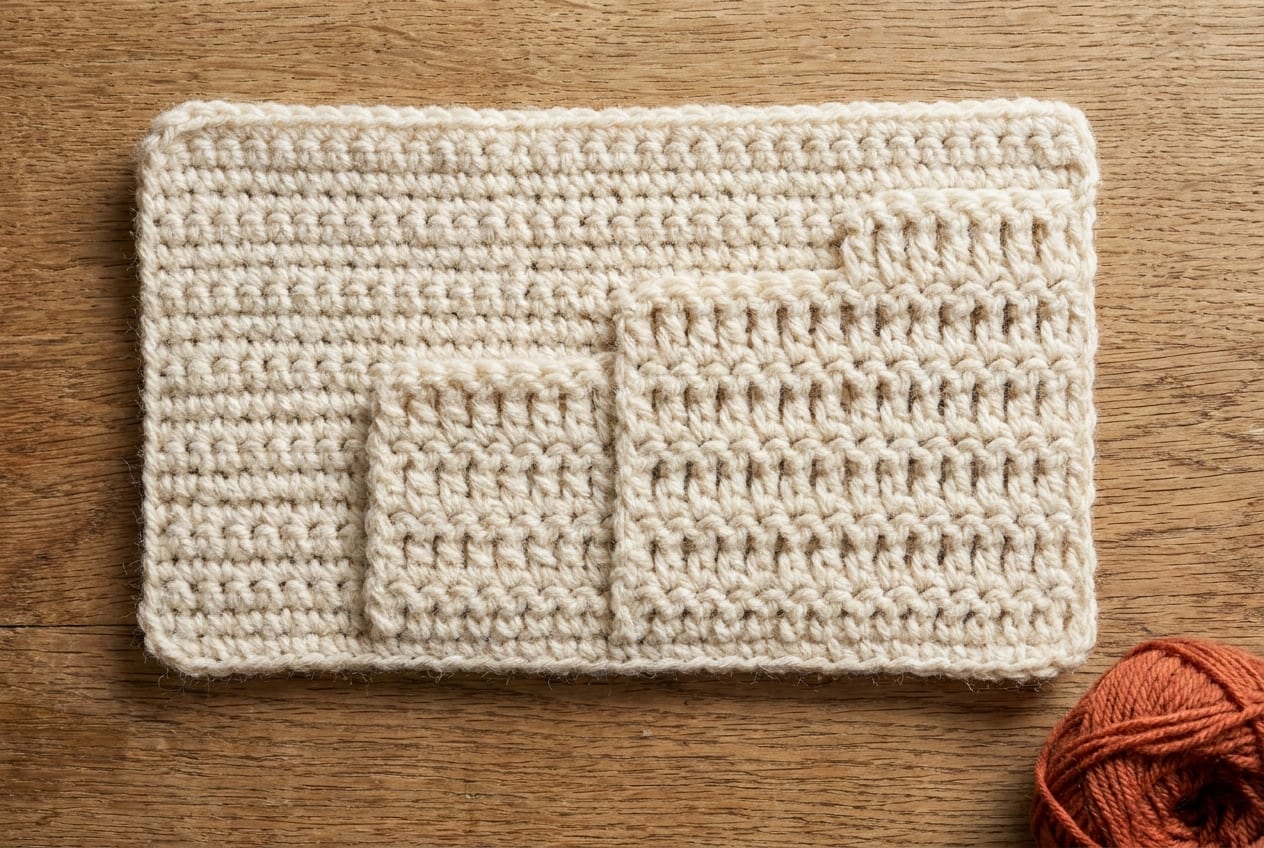
The six foundation stitches really form a ladder. Each one is the previous stitch plus one more yarn over, and each added wrap makes the finished stitch taller. That ladder is the single most useful thing to keep in your head, because height controls almost everything about how a piece behaves.
Here is a rough sense of the heights, measured in worsted weight yarn on a US size H hook (5.0 mm). A single crochet stands a little under a centimeter. Half double is a touch taller. Double crochet is roughly twice the single crochet height, and treble taller again, close to a centimeter and a half. The exact numbers shift with your yarn and your tension, but the proportions hold no matter what you use.
Height is also why the turning chain exists. At the start of a new row you chain a few times to lift your yarn up to the height of the coming stitches, otherwise the edge would pull and pucker. The taller the stitch, the more chains you need. The rough convention is one chain for single crochet, two for half double, three for double, and four for treble. Patterns may vary this by one, and they will tell you whether that turning chain counts as a stitch or not. That one detail, counted or not counted, is behind a surprising number of lopsided rectangles.
You can feel the height difference in the fabric itself. Short stitches sit close together and trap warmth, which is why mittens and stuffed toys lean on single crochet. Tall stitches leave small windows between them, so a treble shawl breathes and drifts. When a pattern photo looks airy and open, you are usually looking at the taller end of the ladder. When it looks solid and firm, you are looking at the shorter end.
A small practical note on hooks. A larger hook makes any stitch looser and the fabric more open, and a smaller hook tightens everything up. So you can nudge the same stitch toward drape or toward density just by changing the hook, without learning anything new. Many crocheters keep a half size up and a half size down from the pattern hook nearby for exactly this kind of fine tuning. If you are still finding your footing with hooks and yarn weights, the groundwork in our crochet for beginners guide covers the basics before you start counting stitches.
Textured and decorative stitches
Once the foundation stitches feel natural, these add dimension, color play, and visual interest. Almost all of them are built from the basic stitches you already know, just grouped or repeated in a clever way.
Bobble stitch
A soft, raised bump that pops off the surface of the fabric. You work several double crochets into the same stitch but leave the last loop of each on the hook, then pull through them all at once to gather them into one rounded lump. Bobbles are popular for nubby blankets, textured cushions, and playful baby items. Worked across a grid, they can even spell out simple shapes or letters.
Full step-by-step: Bobble stitch
Shell stitch
Several stitches, usually double crochets, worked into a single stitch so they fan out like a scallop or a seashell. Shells give a soft, wavy edge and a romantic, lacy look. They show up constantly in shawls, baby blankets, and decorative borders, and they are forgiving enough that many crocheters reach for them on their very first project beyond the basics.
Full step-by-step: Shell stitch
Cluster stitch
A close cousin of the bobble. You start several stitches across a few neighboring stitches, holding the final loop of each on the hook, then join them all in one pull-through so they lean together at the top. Clusters draw the fabric in slightly and create a gentle, textured chevron or honeycomb when repeated. They are the building block of many openwork blanket patterns.
Popcorn stitch
A firmer, more sculptural cousin of the bobble. You work a group of complete stitches into one place, drop the loop, then reach back through the top of the first stitch and pull the group closed so it pokes forward like a little kernel. Popcorns stand prouder than bobbles and hold their shape well, which makes them lovely for chunky cushions and statement borders.
Puff stitch
Soft and pillowy, made entirely from half double crochet motions. You yarn over and pull up a loop several times into the same stitch without finishing any of them, then pull through the whole pile at once. The result is a plush little puff with no firm edge. Puffs are wonderful in cowls and baby blankets where you want squish rather than definition.
V-stitch
An open, airy unit made of two stitches with a chain space between them, worked into the same base stitch so they form a small V. V-stitches grow lacy fabric quickly and keep it light and stretchy, which suits wraps, summer tops, and lightweight blankets. They are also beginner-friendly, since the chain space makes it easy to see where the next stitch goes.
Granny stitch
Less a single stitch than a beloved pattern: small clusters of double crochet separated by chain spaces, worked in rounds or rows. The classic granny square is built from it, but the same rhythm makes blankets, cardigans, and bags. The granny stitch is portable, rhythmic, and endlessly forgiving, which is why it has stayed in fashion for over a century.
How to choose the right stitch for a project
With a dozen-odd stitches in hand, the question shifts from how to make them to which one to use. Four factors decide it.
Drape. Taller, more open stitches like double crochet and treble produce fabric that flows and folds. Shorter, denser stitches like single crochet make stiff fabric that holds its shape. For a flowing shawl, go tall. For a basket that stands up on its own, go short.
Density. If you can see daylight through the fabric, stuffing will show and cold air will pass. Amigurumi and winter wear want the tight weave of single crochet or a small hook. Lace and breezy summer pieces want the gaps that taller stitches and V-stitches give you.
Yarn use. Taller stitches cover more ground per stitch but eat more yarn per square inch. Textured stitches like bobbles and popcorns are especially hungry, since you are packing several stitches into one spot. If your skein is limited, a plain double crochet stretches further than a bobble field.
Beginner-friendliness. The kindest first stitches are single crochet, double crochet, and the granny stitch, because mistakes are easy to spot and easy to pull back. Save bobbles, clusters, and popcorns for once your tension is steady, since their loops are harder to read mid-row.
A quick match: project to stitch
It helps to see the choices lined up. The table below pairs common first projects with a sensible stitch, and the reasoning behind each one. None of these is a rule. They are starting points that tend to work.
| Project | Sensible stitch | Why | |---|---|---| | Amigurumi animal | Single crochet | Tight, no gaps, holds stuffing in | | Cozy winter scarf | Half double crochet | Warm and squishy, grows at a calm pace | | Lightweight summer wrap | Double crochet or V-stitch | Open and drapey, breathes in heat | | Lacy shawl | Treble and shell | Tall and airy, fans out into pattern | | Dishcloth or potholder | Single crochet | Dense, sturdy, takes heat and scrubbing | | First blanket | Granny stitch | Forgiving rhythm, easy to count and fix | | Textured cushion cover | Bobble or popcorn | Raised surface, plenty of visual interest |
Read the table as a conversation between the four factors above. A dishcloth needs density and toughness, so it lands on single crochet. A summer wrap needs drape and air, so it climbs the height ladder to double crochet. Once you can explain why a project sits where it does, you can swap stitches with confidence and design your own pieces from scratch.
If you are completely new to the craft and want the groundwork before the stitches, start with what is crochet. And when you want to plan a colorwork or texture pattern visually, our stitch chart maker turns your stitch choices into a printable chart right in the browser. You can also browse the full crochet stitch reference for the step-by-step guide to any stitch here. Ready for colorwork? Our guides to filet crochet and tapestry crochet build pictures and patterns from these same basic stitches.
Frequently asked questions
What is the easiest crochet stitch?
The chain is the very first thing you learn and the simplest, since it is just pulling yarn through a loop. For making actual fabric, single crochet (UK: double crochet) is the easiest to keep neat, because it is short, dense, and simple to count and fix.
What is the difference between single and double crochet?
Single crochet uses one yarn over and makes a short, dense stitch. Double crochet uses extra yarn overs and is about twice as tall, with a more open, flowing fabric. Single suits structure like amigurumi, while double suits blankets and garments that need drape.
What is the difference between US and UK crochet stitches?
The names are offset by one. A US single crochet equals a UK double crochet, and a US double crochet equals a UK treble. The physical stitches are identical, only the labels differ. Always check the abbreviation key before you start so you know which system the pattern uses.
How many crochet stitches are there?
There are six foundation stitches: chain, slip stitch, single, half double, double, and treble crochet. Beyond those sit dozens of textured and combination stitches like bobble, shell, and granny. Almost all of them are built from the same six basics, just grouped or repeated.
What is the most common crochet stitch?
Double crochet (UK: treble) is the most widely used stitch in patterns, because it grows rows quickly and gives fabric a soft drape. Single crochet is a close second and dominates amigurumi. Between the two, they make up the bulk of most beginner and intermediate patterns.
Which crochet stitches use the least yarn?
Short, flat stitches like single crochet and half double crochet use less yarn per square inch than tall ones like treble. Textured stitches such as bobbles and popcorns use the most, since they pack several stitches into one spot. For a tight yarn budget, single crochet stretches furthest.