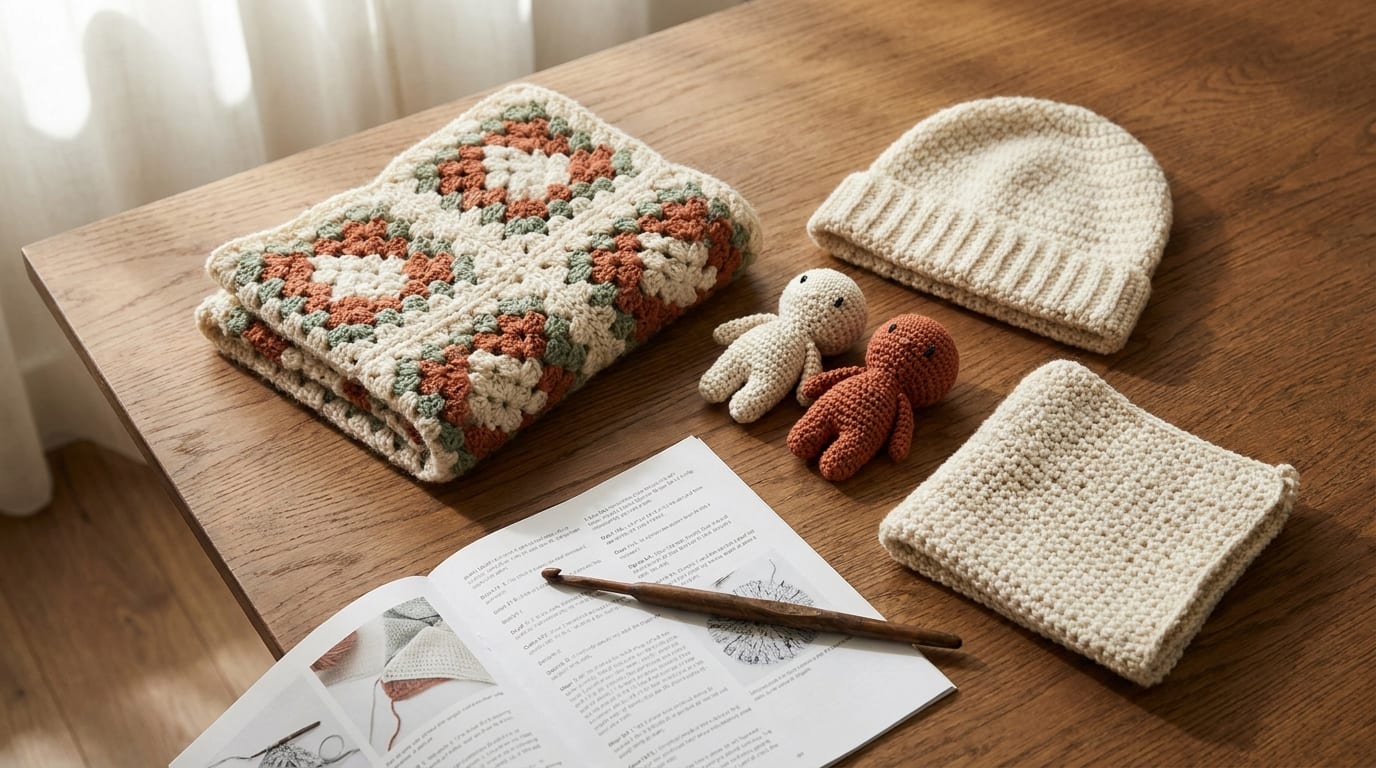
Free crochet patterns, sorted by what you can actually make
The internet has more free crochet patterns than any one person could finish in a lifetime. The hard part is not finding them. It is knowing which project fits your skill today, what yarn and hook it needs, and where a clean free pattern for it actually lives.
So this is not a list of links that rot in a month. It is 25 projects grouped by skill, from your first hour with a hook to a sweater you will wear all winter. For each one you get the yarn weight, the hook, a rough yardage, and the new skill it teaches. At the end, the exact places to download a free, well written pattern for any of them.
If you have never held a hook, start with our calm introduction to crochet first. It covers the four foundation stitches and how to read a pattern, then this list will make sense.
Five first projects you can finish today
The first project you finish matters more than the second. Stall on something fiddly and the hook goes back in the drawer. Start small. Worsted weight yarn (UK aran) and a US H hook (5.0 mm) work for all five of these.
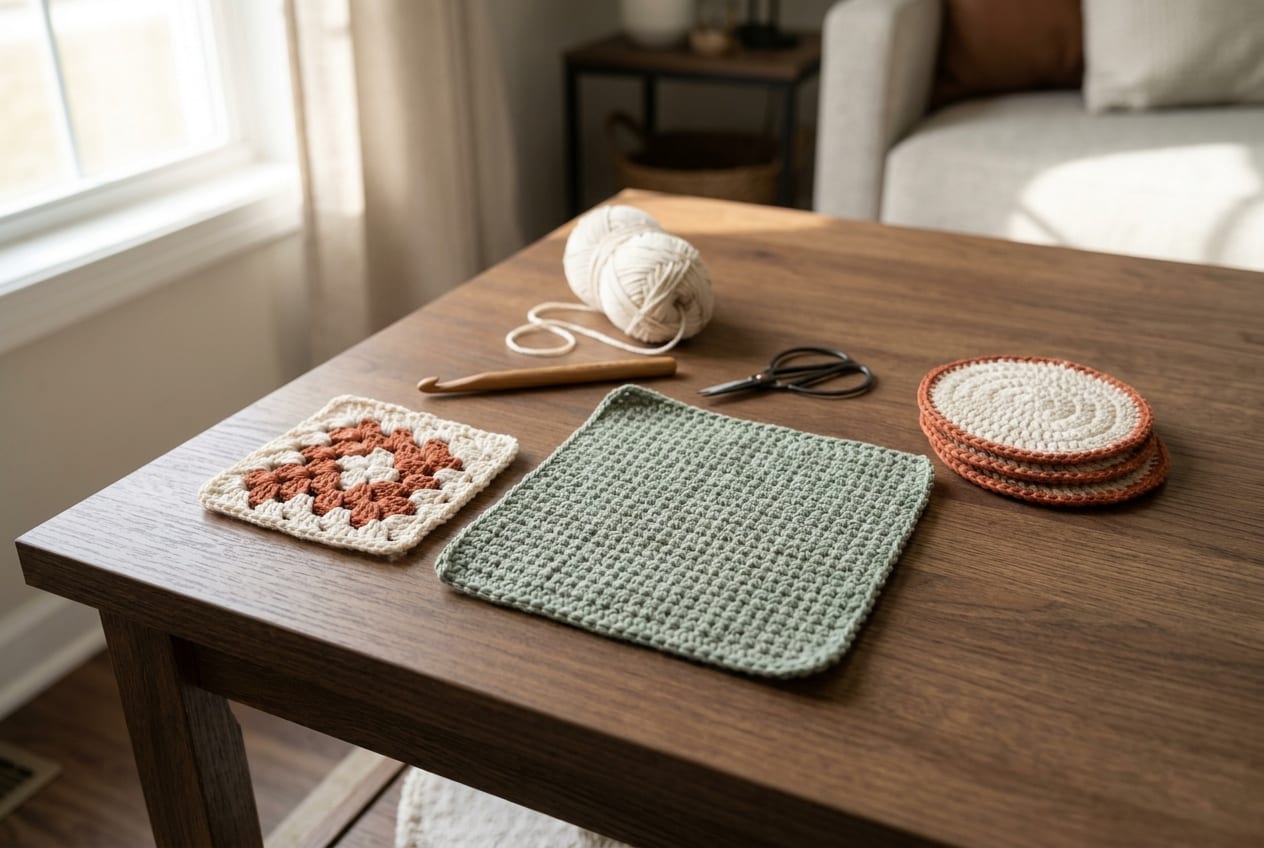
- Classic granny square. Double crochet clusters worked in rounds, about 25 yards, under an hour. It teaches you rounds and clean corners, and it is the building block of half the blankets you will ever make.
- Single crochet dishcloth. Cotton, about 50 yards, one evening. Single crochet across, turn, repeat. By the last row your edges are straighter and your tension is even. Useful in the kitchen the same day.
- Chain and tassel bookmark. Chain 60, tie a tassel on each end. Two minutes of work and a small gift you actually use. It trains a steady chain, which is the foundation of everything else.
- Coaster set. A circle of three rounds, about 20 yards each. This is where you learn the magic ring and how to join a round without a lumpy seam.
- Half double crochet scarf. Worsted, one to two skeins (about 300 yards), a few evenings. One long stitch repeated with no shaping. By scarf number two your tension settles for good.
Five weekend makes that teach one new skill each
When the basics feel automatic, the next step is shaping. Each of these adds a single new technique, so you are never learning five things at once.
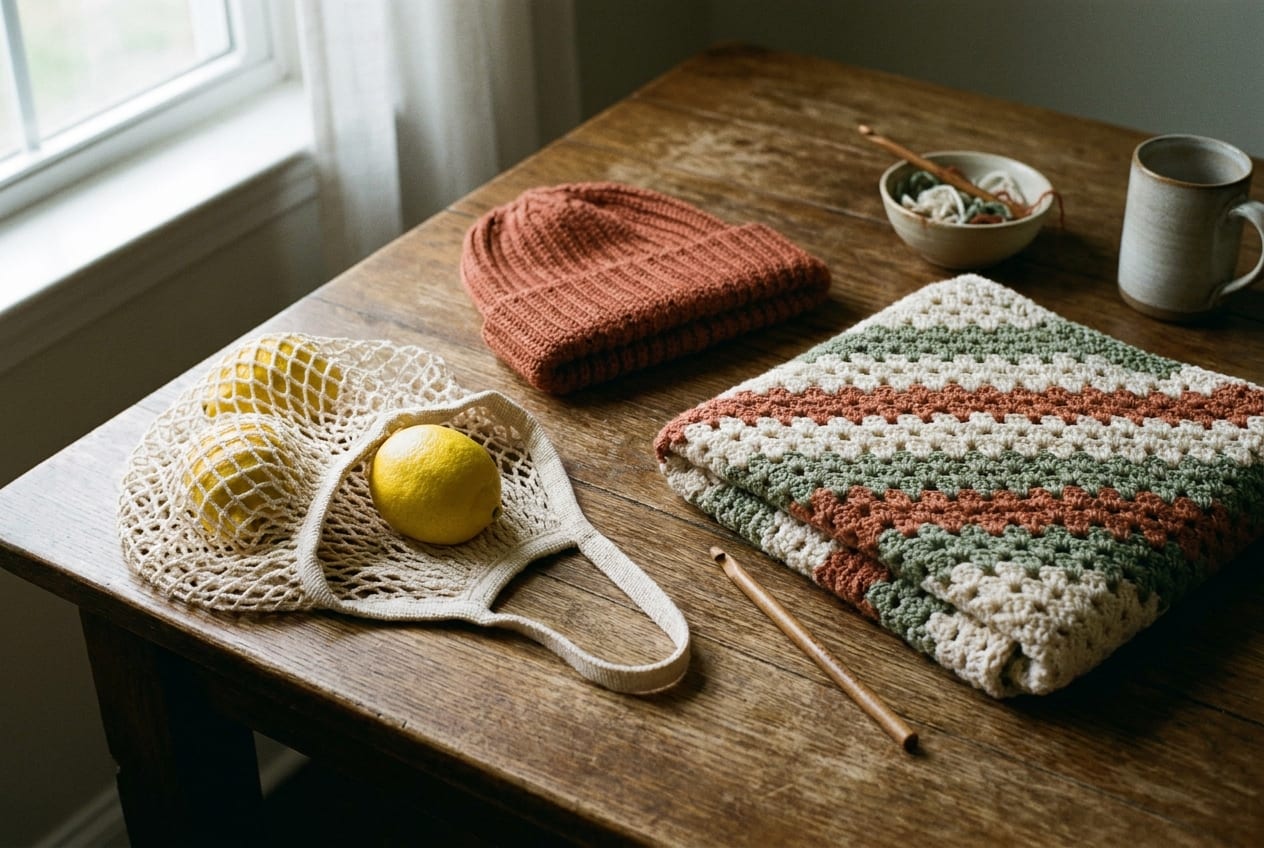
- Mesh market bag. Cotton, about 250 yards, US H hook. Double crochet and chain spaces form a net that stretches to hold a surprising load. It teaches mesh and how crochet stretches under weight.
- Ribbed beanie. Worsted, about 120 yards, two to three hours. Half double crochet worked in the back loops makes a stretchy rib. You also learn crown decreases, which show up in every hat from here on.
- Granny stripe triangle shawl. DK weight, about 400 yards, ideally a gradient cake. Increases at both edges grow the triangle while the color shifts on its own. It teaches edge increases and tidy color changes.
- Throw pillow cover. Worsted, sized to an 18 inch insert. Two panels and a buttoned back. This is the gentlest way to learn why gauge matters, because the cover has to fit the cushion.
- Hexagon potholder. Cotton held double, about 80 yards. The doubled yarn makes it heat safe, and the hexagon teaches you to shape around six corners.
Five garments worth the time
A first sweater is humbling. It also becomes the piece you reach for most that year. These five forgive imperfect gauge and read clearly even in their free versions.
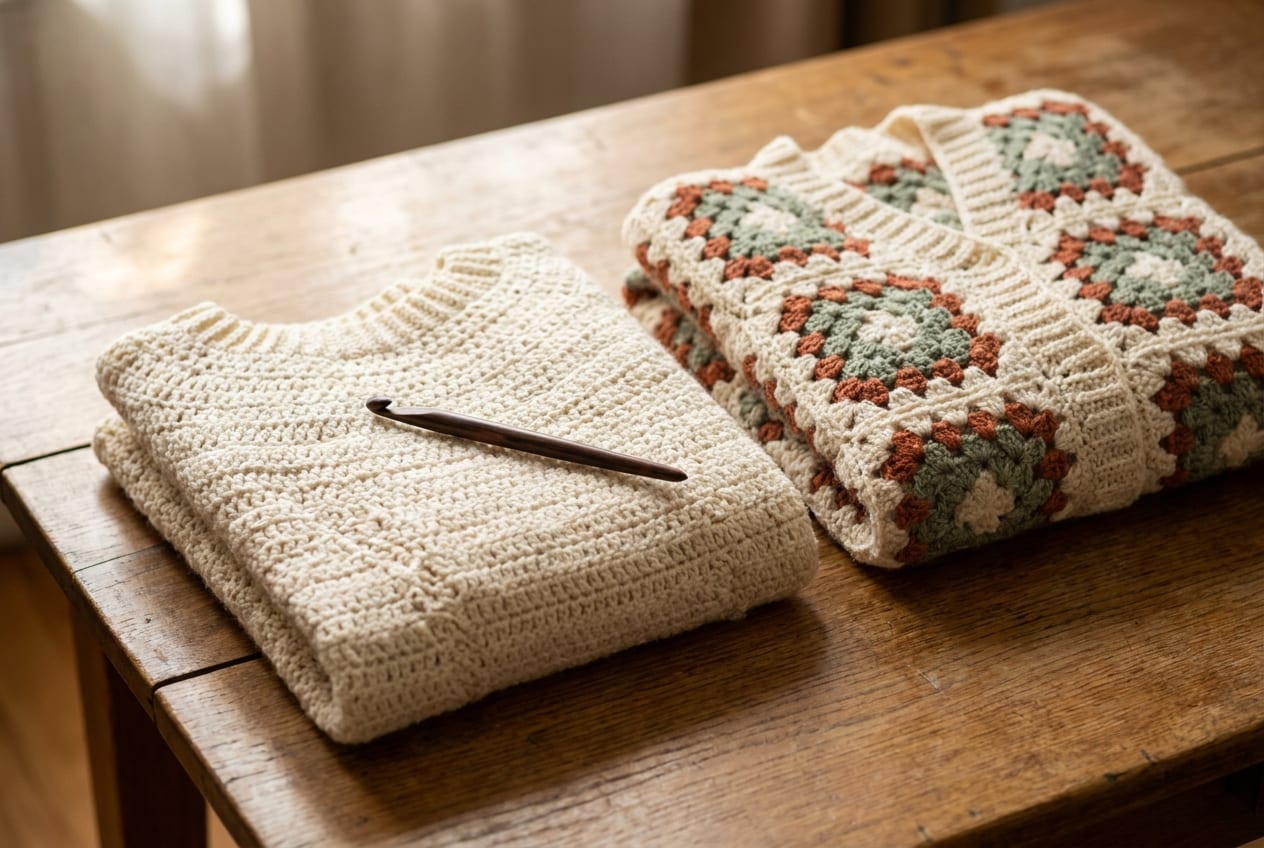
- Top-down raglan pullover. Worsted, worked from the neck down so you can try it on as you go. The most forgiving first sweater there is.
- Granny square cardigan. Make a stack of squares, join them, add a collar. Almost no shaping, and you can carry one square in your bag for weeks.
- Summer mesh tee. Cotton or linen DK in a double crochet mesh. It drapes, it breathes, and it teaches you how a light fabric behaves.
- Two rectangle vest. Two simple panels seamed at the shoulders and sides. No increases, no decreases, just even fabric and a tidy seam.
- Cropped buttoned cardigan. Two fronts, a back, and two sleeves. This is your introduction to simple set in construction without a steep climb.
Five amigurumi for an evening
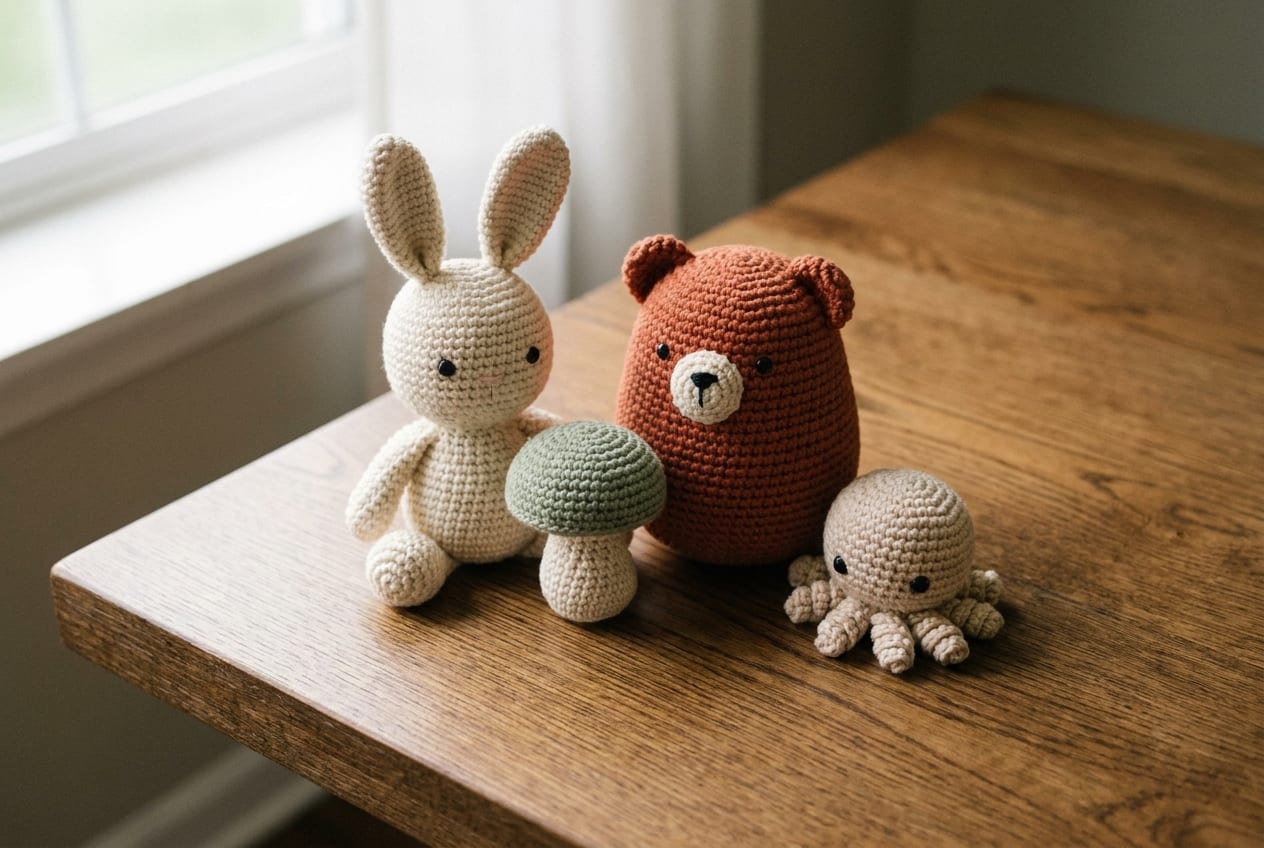
A small stuffed animal sits in the gap between project and toy. It finishes in a sitting and never asks you to swatch. All five use amigurumi weight cotton, a 3.0 mm hook, a magic ring, and a bag of fiberfill.
- Classic bunny. Single crochet spirals, about 100 yards, one evening. It teaches the magic ring and the invisible decrease, the two moves behind every amigurumi.
- Roly poly bear. A rounded body built from a single sphere. Good practice for even increases and decreases that keep a ball smooth.
- Mushroom with a tilted cap. A color change at the cap teaches you to join a new color cleanly in the round.
- Simple octopus. A round head and eight short legs. Repeating one small piece eight times builds speed and consistency.
- Curled tentacle jellyfish. A little bell with long chains that curl on their own. It is the friendliest way to learn that chains spiral when you work back along them.
Five quick gifts and home pieces
Small, fast, and easy to give away. Most finish in an afternoon.
- Chunky storage basket. Super bulky yarn held double, single crochet spirals, about two hours. The doubled yarn gives it walls that stand up on their own.
- Mug cozy. Worsted, about 30 yards, half an hour, with a button loop closure. A good way to use up an odd half skein.
- Mini bunting garland. A row of small triangles worked off one long chain. Endlessly repeatable, and it teaches you to space motifs evenly.
- Plant hanger. Jute or t-shirt yarn, mostly chains and simple knots. A gentle introduction to working with materials thicker than yarn.
- Textured washcloth trio. Cotton, three cloths in three different stitches so you can feel how each one behaves before committing to a bigger project.
How to spot a good free pattern before you start
A free pattern costs nothing to download and a whole evening to follow, so it is worth a quick read before you commit. We run the same short check every time.
- A skill level and a stitch list. A good pattern says upfront whether it is beginner or intermediate and which stitches it uses. If an abbreviation is new to you, our crochet stitches library has the step by step for each one.
- Finished measurements. Anything you wear, or fit to a cushion, should list its final size. No measurements at all is a quiet warning sign.
- A gauge note for fitted pieces. Garments and bags need a gauge. A pattern that skips it and still expects a clean fit is hoping, not designing.
- Stitch counts at the end of rows or rounds. These let you catch a mistake on the row you made it, not ten rows later.
- Photos from more than one angle. One flattering hero shot hides a lot. A couple of plain, well lit photos tell you what you are really making.
- US or UK notation, stated clearly. The same word means different stitches in each system, so the pattern should say which one it follows.
If a pattern is missing two or more of these, it does not mean the project is bad, only that you will be filling the gaps as you go. That is fine for a dishcloth and frustrating for a sweater.
One more practical note on yarn. A free pattern names the yarn the designer used, which may be discontinued or hard to find where you live. Match the weight and fiber rather than the exact brand. Our yarn weight converter lines up the US, UK, and EU names so a substitution is a calm decision rather than a gamble.
Where to find free crochet patterns
A project idea is only half the job. Here is where to download a clean, well written free pattern for any of the 25 above, ranked by how much you can trust what you find.
- DROPS Design (Garnstudio). The largest fully free library, with thousands of professionally graded patterns and photo tutorials for the techniques. If you want one bookmark, make it this one.
- Ravelry. The biggest catalog of all, with a filter for free patterns in a single click. The site had accessibility problems after its 2020 redesign, so if it bothers your eyes, keep the sessions short, but the patterns are strong.
- Yarn brand sites. Lion Brand, Yarnspirations (Bernat, Caron, Red Heart), and Paintbox all publish free patterns formatted for their own yarns, which makes substitution easy.
- Indie designer blogs. Many designers release one free pattern a month to grow a newsletter. To find a specific project, search the project name plus "free crochet pattern", then click through to the designer's own site rather than a roundup.
A word on Pinterest. It is wonderful for discovery and useless as a source. Always click through to the original site, because the pin image often has nothing to do with the pattern it links to, and the real PDF lives with the designer.
Frequently asked questions
Are free crochet patterns as good as paid ones?
Often yes. Many established designers publish part of their work for free as portfolio pieces or to grow an audience. Free patterns from DROPS Design and yarn brand sites are professionally edited. Paid patterns more often add extras like multiple sizes, video tutorials, or an ad-free printable PDF.
Where do I find free crochet patterns as PDF downloads?
DROPS Design offers every pattern as a free printable. Ravelry filters by free and by PDF in one click. Most yarn brand sites such as Lion Brand and Yarnspirations also offer free PDF downloads, sometimes after a simple email signup.
What yarn should I use for my first free pattern?
A worsted weight cotton or acrylic is the most forgiving choice. Cotton shows stitches clearly so you can see what is happening, and acrylic costs little if you frog and redo. Avoid black yarn and very fluffy yarn until you can read your stitches with confidence.
How do I know if a free crochet pattern is beginner friendly?
Look for a skill level label of beginner or easy, and check that it uses only basic stitches like chain, single crochet, double crochet, and slip stitch. Avoid making a garment or anything that needs gauge as your first project unless you are ready to swatch.
Why are some patterns labeled US and others UK?
American and British crochet use different names for the same stitches. A US single crochet equals a UK double crochet, and a US double crochet equals a UK treble. Read the abbreviation key at the start of any pattern to confirm which notation it uses before you begin.
Can I sell items I make from a free crochet pattern?
It depends on the designer. Many free patterns allow personal use only. Some grant sale rights for finished items, sometimes with credit. Always read the terms on the pattern page before you sell, and never resell or redistribute the pattern file itself.
Pinterest pin headlines (internal reference, strip before publish)
- A: "25 Free Crochet Patterns Worth Saving"
- B: "Free Crochet Patterns for Every Skill Level"
- C: "Where to Find Real Free Crochet Patterns in 2026"