Amigurumi yarn, the short answer
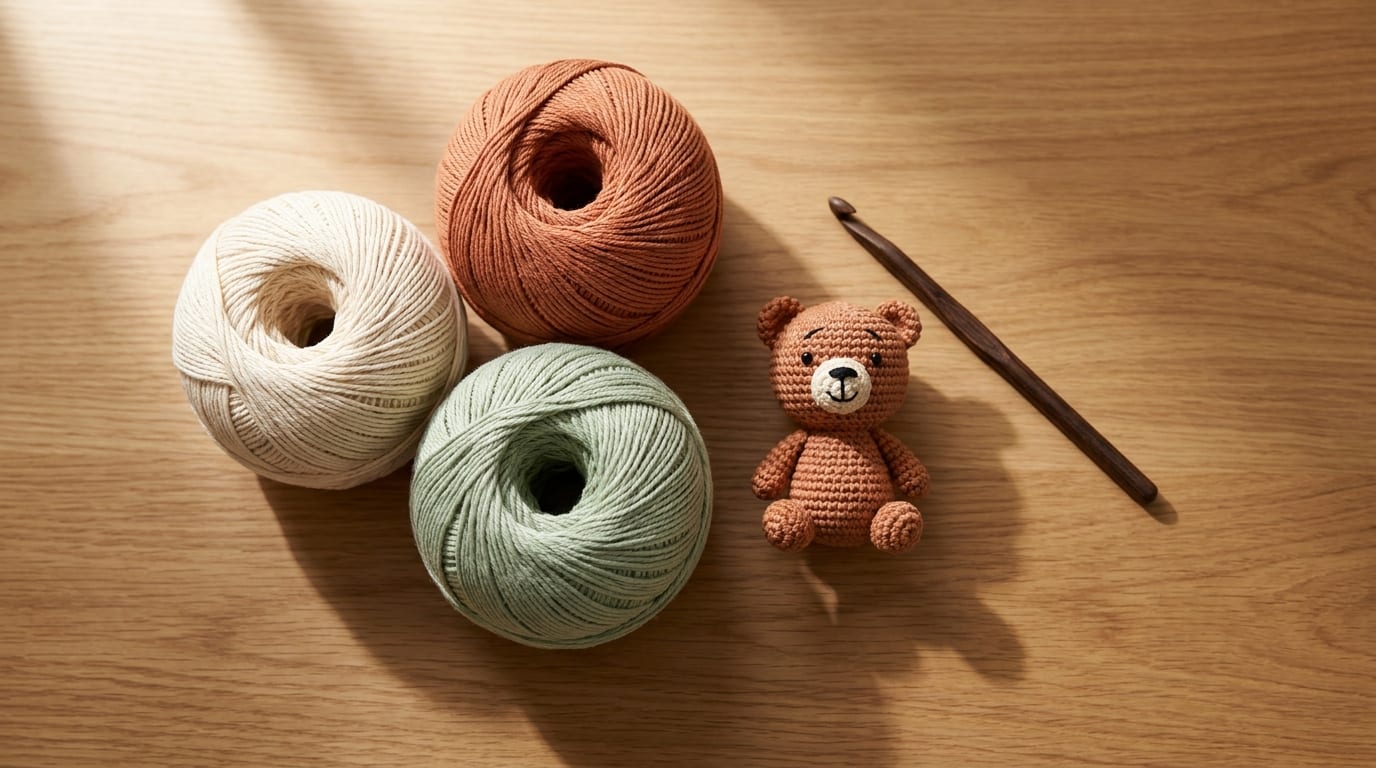
For most amigurumi, the yarn to reach for is smooth cotton, worked on a hook one to two sizes smaller than the label suggests. Cotton gives crisp, clear stitch definition and holds its shape, and the smaller hook makes the fabric dense enough that the stuffing never peeks through. That single pairing, smooth cotton plus a tight hook, is what makes a small stuffed toy look neat instead of loose and gappy. Reach for a light, solid color while you are learning so you can actually count your stitches.
That is the whole answer in one breath. The rest of this guide explains why cotton suits the craft, how cotton compares to acrylic and to blends, the smaller-hook rule that matters for every fiber, which weights to use, what to skip, and how much to buy. If you are brand new to the whole technique, our what is amigurumi explainer covers the basics first, and amigurumi for beginners walks through your first toy.
Why cotton suits amigurumi
Amigurumi asks something specific of a yarn. The fabric gets stuffed firm and the surface is on full display, so you want stitches that stay sharp and a fiber that holds its shape under tension. Cotton does exactly that.
Cotton is a firm fiber with a clean, matte surface and no halo of fuzz. Each stitch sits there as a crisp little V, so the rounds read clearly and the stuffed surface looks tidy rather than blurred. Because there is no fluff to soften the edges, the stitch definition stays sharp even after you stuff the piece tight. Cotton also holds its shape well, so a cotton toy keeps the form you built into it instead of slumping over time.
There is a practical bonus too. Cotton is washable, which matters for a toy that a child will carry around and inevitably get dirty. A fiber you can throw in the machine is far more useful for a kid's toy than one you have to baby. For more on the fiber itself, see our cotton yarn page.
The trade-off is that cotton has almost no stretch and is less forgiving of uneven tension. If your hands are still finding their rhythm, cotton shows every wobble plainly and will not spring back to hide it. That honesty is useful for learning, but it can feel a little stiff at first, which is exactly why some makers reach for acrylic instead.
Cotton vs acrylic vs blend
Once you know cotton is the default, the real decision is cotton, acrylic, or a blend of the two. All three make perfectly good toys. They just lean in different directions, and the right pick depends on who the toy is for and how confident your tension is.
| Fiber | Stitch definition | Forgiveness | Best when | |---|---|---|---| | Cotton | Crisp and sharp | Low, shows every wobble | You want a clean, defined toy that holds its shape | | Acrylic | Slightly softer | High, hides uneven tension | The toy is for a child, or your tension is still settling | | Cotton-acrylic blend | Fairly crisp | Medium | You want some of both, a tidy surface with a little give |
Cotton is the choice when you want the toy to look as sharp as possible. The stitches are defined, the shape holds, and the surface stays clean and matte. Pick it when you care most about the finished look, and when you do not mind that it punishes uneven tension.
Acrylic is the friendly, low-stakes option. It is cheaper, softer, machine washable, and it comes in every color imaginable. Most importantly it has a little give, which forgives uneven tension and makes it the practical pick for a toy a child will drag around. The trade-offs are a slightly less crisp stitch and the fact that some acrylics are a touch fuzzy or splitty, so choose a smooth, firmly spun one.
A cotton-acrylic blend aims for the middle. You get some of cotton's crispness with some of acrylic's softness and give, which makes a blend a sensible compromise if you cannot decide. If you are weighing up fibers more broadly, our yarn for beginners guide goes deeper on how each one behaves in the hand.
The smaller-hook rule, explained
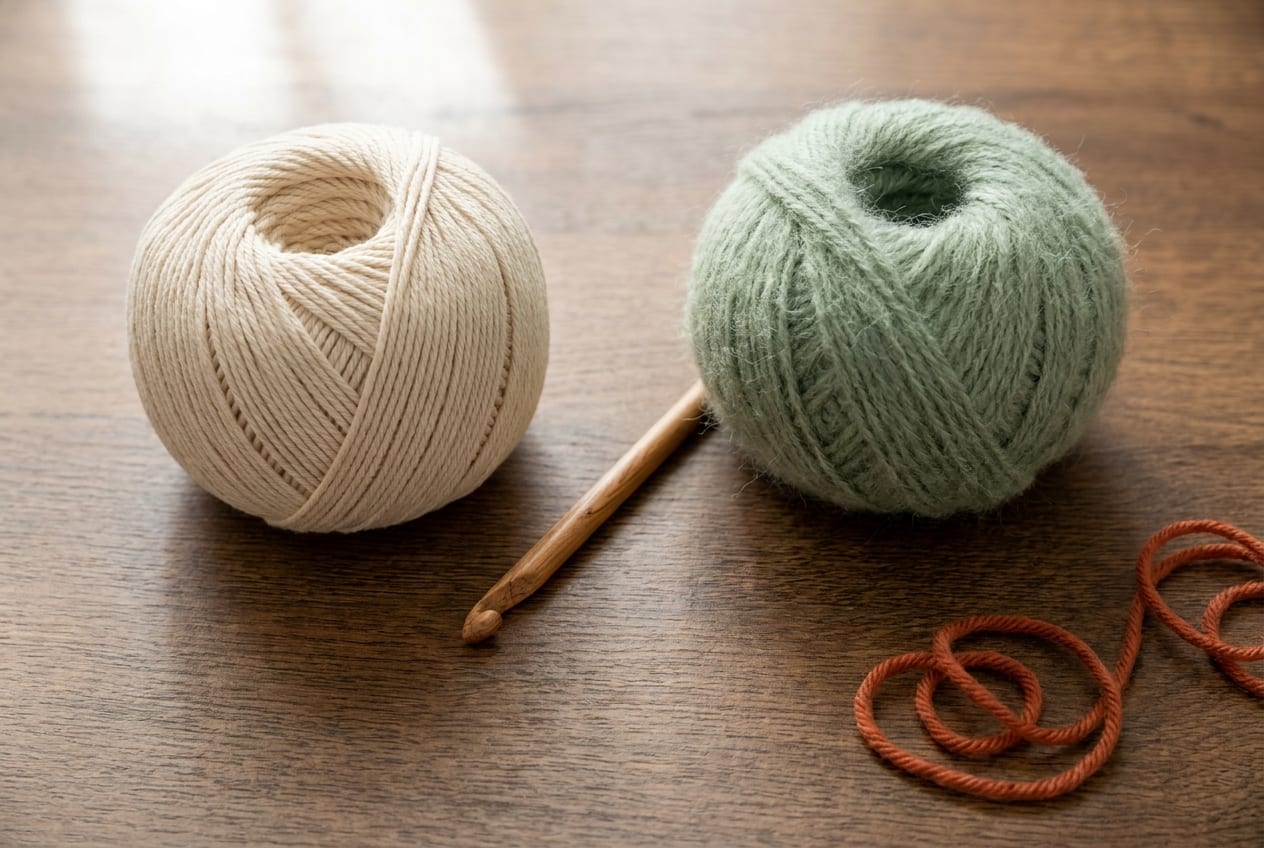
This is the one rule that separates a tidy amigurumi from a loose, gappy one, and it applies no matter which yarn you choose. Use a hook one to two sizes smaller than the size printed on the yarn label.
Here is why. Yarn labels recommend a hook size aimed at garments and blankets, where you want a soft, flexible fabric with a bit of drape. Amigurumi wants the opposite. You are stuffing the piece firm, and if the fabric is loose, the stuffing shows through the gaps between stitches as little white flecks, and the toy reads as sloppy. Dropping a size or two tightens every stitch, closes those gaps, and gives you a dense, sturdy fabric that hides the stuffing completely.
A worked example makes it concrete. Take a worsted (UK aran) cotton that lists 5.0 to 5.5 mm on the band. For a toy, work it at roughly 3.5 to 4.0 mm instead. The hook will feel small against the yarn and the first few stitches will feel tight, which is exactly right. That tightness is the whole point.
If your finished fabric still shows stuffing through the stitches, go down one more size. If your hands are cramping and the fabric feels like cardboard, ease up half a size. There is a small comfortable window, and a round or two of practice will tell you where it sits for your tension.
Yarn weights for amigurumi
Most amigurumi is worked in one of two weights: DK (CYC 3) or worsted (CYC 4, called aran in the UK). Both are common, and the choice mostly decides how big the finished toy comes out.
DK cotton is a very popular amigurumi weight. It is a touch finer than worsted, so the stitches are smaller and the finished toy is neat and not too big, which suits the palm-sized animals most people picture when they think of amigurumi. It is a lovely default for a first project.
Worsted (aran) cotton is the other common pick. It is a little thicker, so it works up faster and gives a slightly larger toy for the same pattern, which some makers prefer because the bigger stitches are easier to see and count while learning. You can read more on our worsted weight yarn page.
Either weight is fine. The thing that trips people up is the names, since US, UK, and EU labels do not line up neatly. Our yarn weight converter maps them in one chart, so when a pattern calls for DK and your local yarn is labeled something else, you can check at a glance. Whichever weight you choose, the smaller-hook rule still applies: take whatever the label recommends and drop a size or two.
What to avoid
Some yarns make amigurumi far harder than it needs to be. None of these are bad yarns. They are just the wrong tool for a small stuffed toy.
- Fluffy or fuzzy yarns. Mohair, chenille, and boucle all have texture built into the strand, with a halo or loops that bury the stitch structure. On amigurumi that is a real problem, because you count stitches constantly to keep the shape right, and a fuzzy yarn makes counting close to impossible. Save these for a scarf.
- Very dark colors. On black or very dark yarn the stitches are nearly invisible, so you cannot see where your hook goes or check your count as you work. They make a beautiful finished toy but a frustrating one to make, especially while you are learning.
- Loosely spun or splitty yarns. Some yarns are spun loosely and split into separate plies when the hook catches only part of the strand. On the tight, dense fabric amigurumi needs, that fight gets old fast. A firmly spun, smooth yarn behaves itself.
The pattern across all three is the same. Anything that hides the stitch or splits under the hook works against the dense, defined fabric amigurumi is built on.
Color and how much to buy
While you are learning, choose lighter solid colors. The reason is the same as with avoiding dark yarn: pale, solid colors let each stitch cast a soft shadow so the loops stand out and your count stays easy. Once your hands know the motion, you can use any color you like, including the dark and bright ones.
On quantity, you need less than you might expect. A small toy often takes well under one skein, and a medium toy one or two. Amigurumi is thrifty that way, since the pieces are small and worked tight. The one rule worth following is to buy the main color in a single dye lot, so the body of the toy stays an even shade with no visible color jump where one ball ends and the next begins. Grab one skein for a small make, two if the toy is medium or you want a comfortable margin.
To recap the whole thing: smooth cotton or a smooth acrylic, in DK or worsted weight, a light solid color while you learn, and a hook one to two sizes smaller than the label says. Get those right and the toy almost makes itself. That combination is genuinely the best yarn for amigurumi for most people starting out.
Frequently asked questions
What is the best yarn for amigurumi?
Smooth cotton is the usual top choice, worked on a hook one to two sizes smaller than the label suggests. Cotton gives crisp stitch definition and holds its shape, and the tight fabric hides the stuffing. A smooth acrylic is a good, more forgiving alternative, especially for a child's toy.
Is cotton or acrylic better for amigurumi?
Both work well. Cotton shows stitches crisply and holds its shape, but it has no stretch and is less forgiving of uneven tension. Acrylic is cheaper, softer, washable, and forgiving, which suits a toy a child will drag around. A cotton-acrylic blend splits the difference.
What weight of yarn is best for amigurumi?
Most amigurumi uses DK (CYC 3) or worsted (CYC 4, UK aran). DK cotton is a very popular choice because it makes a neat, not-too-big toy. Worsted is a little thicker and works up faster with larger, easier-to-count stitches. Either is a solid pick.
Why do you use a smaller hook for amigurumi?
A smaller hook makes a tighter, denser fabric so the stuffing cannot show through the gaps between stitches. Yarn labels recommend hooks for soft, drapey garment fabric, which is too loose for a stuffed toy. Drop one or two sizes, so a 5.0 to 5.5 mm yarn is worked at about 3.5 to 4.0 mm.
What yarn should I avoid for amigurumi?
Avoid fluffy or fuzzy yarns like mohair, chenille, and boucle, since they bury the stitches and make counting impossible. Skip very dark colors while learning because you cannot see your stitches, and avoid loosely spun or splitty yarns that the hook catches and separates.
How much yarn do I need for one amigurumi?
Less than you might think. A small toy often takes well under one skein, and a medium toy one or two. The pieces are small and worked tight, so amigurumi is thrifty with yarn. Buy the main color in a single dye lot so the body stays an even shade.