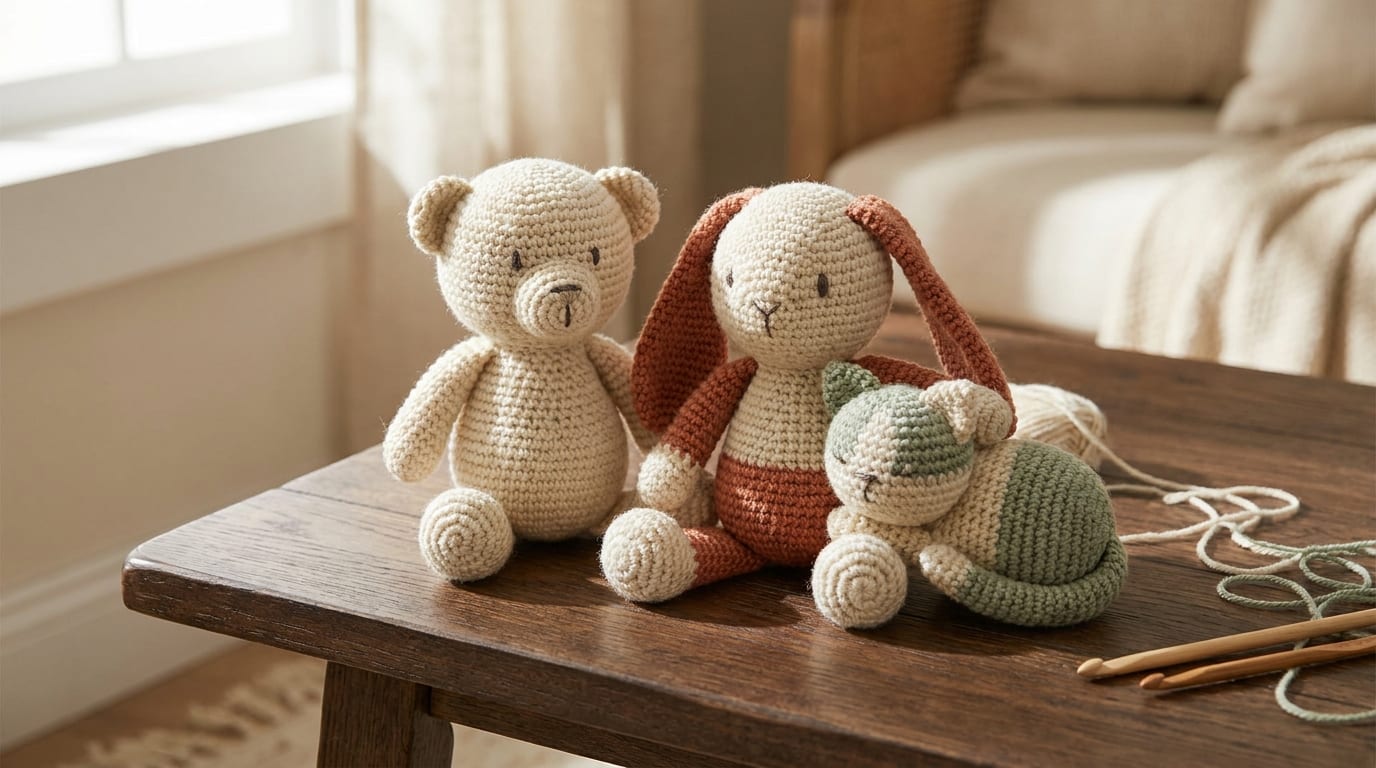
Free amigurumi patterns, and how to pick one that works
There are more free amigurumi patterns online than you could crochet in ten years. The trouble is not supply. It is that a free pattern costs nothing to download and a whole evening to follow, and a vague one leaves you holding a lump that looks nothing like the photo. The skill is knowing where the clean patterns live and how to read one before you pull up the magic ring.
This guide does that in order. First, what separates a good free amigurumi pattern from a bad one. Then the source types worth your time, the quick check to run before you cast on, and free patterns sorted two ways, by skill level and by the animal you want to make. At the end, a plain word on copyright and on keeping a toy safe for a small child.
If amigurumi itself is new to you, read what is amigurumi first. It covers the magic ring, the spiral, and the invisible decrease, and after that the patterns below will read clearly.
What a good free amigurumi pattern looks like
Almost all amigurumi is the same handful of moves. You work single crochet (sc, UK double crochet) in a tight spiral, you increase and decrease to make spheres and tubes, and you sew the pieces together at the end. Because the fabric is dense and worked in the round, one wrong stitch count early on quietly warps the whole shape. So the pattern has to be precise in a way a scarf pattern never needs to be.
A good one tells you exactly how many stitches you should have at the close of each round. It names a yarn weight and a hook a size or two smaller than the yarn band suggests, which is what keeps the fabric tight enough that stuffing does not show through. It shows the finished piece from the front, the side, and often the back, so you can see how the parts actually sit. And it has a comment section or reviews, because the makers who came before you will have flagged the round where everyone goes wrong.
Hold that standard loosely for a simple ball and firmly for anything with many parts. A pattern missing two or three of these is not worthless, it just means you will be filling the gaps as you go.
Where to find free amigurumi patterns
A toy idea is the easy half. Here is where a clean, well written free pattern for it actually lives, roughly in order of how reliable the writing tends to be.
- Large pattern databases. Big catalogs let you filter by "free" and by "amigurumi" or "toy" in a click or two. Ravelry is the one most people know, and its filters are the fastest way to see hundreds of free options at once and sort by what other makers rated highly.
- Independent designer blogs. Often the highest quality of the lot. A designer writing on their own site usually includes step photos, a clear stitch count each round, and notes on the parts that trip people up. To find one, search the animal name plus "free amigurumi pattern" and click through to the designer's own page.
- YouTube video tutorials. The friendliest route for an absolute beginner who would rather watch a stitch than read it. You can pause, rewind, and match your hands to the screen. The trade-off is that following a two hour video is slower than reading a one page chart once you are comfortable.
- Large free-pattern aggregator sites. These collect many free patterns in one place across a lot of designers. Handy for browsing, though the quality varies more than a single designer's blog, so apply the check below before you commit an evening.
- Pinterest. Excellent for discovery and nothing else. Most pins link back to a designer blog, so treat it as a search tool and always click through to the original site, because the pinned image often has little to do with the pattern behind it.
Pattern apps and libraries also gather free patterns and keep them in one tidy place, which saves you re-hunting for a file you liked last month.
How to read and vet a pattern before you cast on
Run the same short check every time, before the hook touches the yarn. It takes a minute and saves the evening.
- US or UK terms, stated clearly. A US single crochet is a UK double crochet, so the same word means a different stitch in each system. The pattern should say which one it follows. If it does not, that is your first warning sign.
- A stitch count in parentheses each round. Something like
(18)at the end of a round. This is the single most important thing in an amigurumi pattern. It lets you catch a missed increase on the round you made it, not six rounds later when the shape has already gone wrong. - Yarn weight and hook size named. You want both. The hook is usually smaller than the yarn band recommends, on purpose, to keep the stitches tight.
- Clear photos from more than one angle. One flattering hero shot hides a lot. A couple of plain, well lit photos of the front and back tell you what you are really going to make.
- Comments or reviews from real makers. Read a few before you start. They are an unofficial errata page, and they will point you straight at the round where the count goes sideways.
Vague patterns with no stitch counts are the main reason a finished piece comes out as a lump that does not match the photo. If a free pattern is missing two or more of these, it is not necessarily bad, but you will be problem-solving as you go, which is fine for a quick ball and frustrating for a jointed bear.
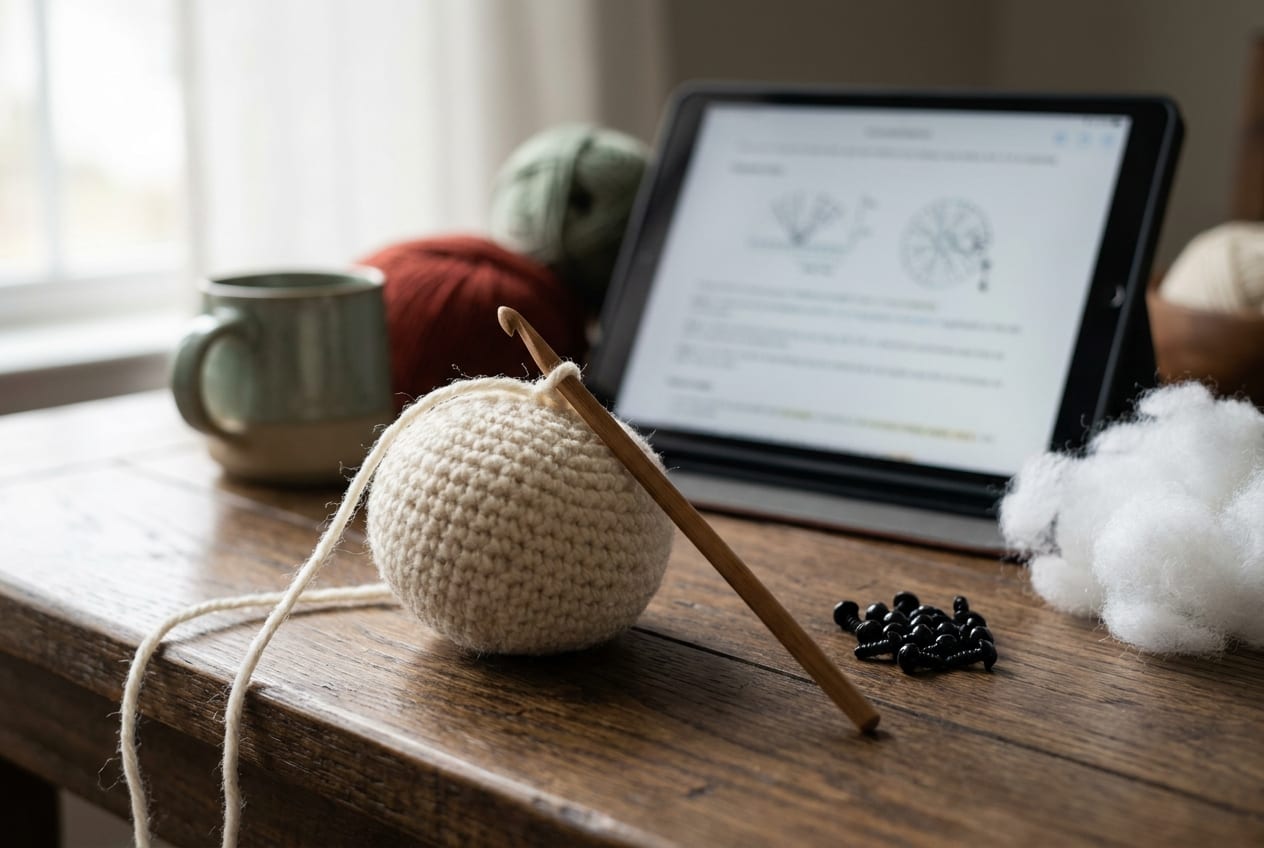
Free amigurumi patterns by skill level
The fastest way to choose well is to match the pattern to where your hands are today. A toy that is one notch too hard is how the project ends up in a drawer. These three tiers describe what each free pattern will look like before you open it.
Beginner
Single color, simple shapes, no fiddly assembly. A plain ball is the classic starting point, and from there a basic bear or bunny built from spheres and tubes, or a simple cat. You are practicing the magic ring, even increases and decreases, and stuffing a round shape so it stays smooth. There is little or no sewing, and no color changes to manage. If you want a gentle, structured start, amigurumi for beginners walks through your first few in order.
Intermediate
Here the pattern adds three things at once, so look for one that introduces them clearly. You get color changes worked in the round, safety-eye placement that has to be symmetrical, and several separate pieces that you sew together at the end. A two-tone animal, an amigurumi with distinct arms and legs, or a piece with an embroidered face all sit at this level. The sewing is where many people slow down, so a pattern with photos of the assembly step is worth choosing over one without.
Advanced
This is jointed limbs, fine facial shaping, wire armatures inside slim parts, and a lot of small pieces that all have to line up. Think a poseable animal whose arms move, or a doll with sculpted features. The patterns are longer, the part count is higher, and a clean stitch count each round matters more than ever, because a small error multiplied across twenty pieces shows. Come here once spheres, color changes, and assembly feel automatic.
Free amigurumi patterns by animal type
Most people arrive with a specific creature in mind. Here are the categories that get searched the most, with where to go next on CrochetZen for each.
- Animals. Bears, bunnies, and cats are the most searched of all, and the most beginner friendly because they are built from spheres and tubes. Start with the amigurumi patterns hub, or go straight to the bunny, cat, and bear sub-hubs. If you are browsing crochet animal patterns more widely, those three are the gentlest place to begin.
- Sea creatures. Octopuses, whales, and jellyfish. Round heads with repeated small parts, which builds speed because you make the same little piece several times over.
- Dolls and people. A body, a head, and limbs, usually with an embroidered or safety-eye face and often clothes. These lean intermediate because of the assembly and the facial detail.
- Food. Fruit, vegetables, sweets, and tiny meals. Many are quick, single-color beginner makes, which is why they are a popular second project.
- Seasonal characters. Pumpkins, snowmen, hearts, and holiday figures. These spike around their season and range from very simple to fairly involved.
For the broader picture beyond toys, our free crochet patterns roundup sorts blankets, hats, and garments by skill the same way this page sorts animals.
A quick word on copyright and selling finished toys
A free pattern is still copyrighted. Free means free to read and to make from, not free to copy or hand around. In practice that means two things. You can make the toy, and you can often sell the finished item, but you have to check the designer's own terms first, because some allow sales and some grant personal use only. What you cannot do, ever, is repost, screenshot, or resell the pattern itself. The instructions belong to the person who wrote them, even when they gave them away.
So before you sell at a craft fair or online, read the licence note on the pattern page. Many designers are happy for you to sell finished toys and only ask for a credit. Sending a buyer to the original pattern, rather than copying the file, is the line that keeps everyone on the right side of it.
Safety when the toy is for a child
If the amigurumi is a gift for a child, the pattern's cuteness matters less than three safety habits. Small parts are a choking risk, and a stuffed toy gets chewed, thrown, and slept on.
- Embroider the eyes for anyone under 3. Safety eyes are plastic posts that lock in from behind, and they can still work loose over time. For a baby or toddler, skip them and embroider the eyes in yarn instead, so there is nothing hard to come off.
- Stuff firmly. A densely stuffed toy holds its shape and has no loose pockets of fiberfill that could be pulled out through a gap. Firm stuffing also keeps the seams from gaping.
- Sew every piece on very securely. Arms, ears, tails, and any add-on should be stitched down hard, gone over more than once, with the ends woven in well. Give each part a firm tug before you hand the toy over.
When in doubt, make the whole face from yarn and keep the design simple. A child does not need wire joints or tiny beads, and leaving them out removes the risk entirely.
Frequently asked questions
Where can I find free amigurumi patterns?
Large pattern databases like Ravelry let you filter by free and by amigurumi in a click. Independent designer blogs are often the highest quality, with step photos. YouTube suits beginners who want to watch, and Pinterest is good for discovery as long as you click through to the original designer's site.
Are free amigurumi patterns good enough for beginners?
Many are excellent. Plenty of established designers publish beginner amigurumi for free to build an audience. Look for a single-color, simple-shape pattern that states its terms, gives a stitch count each round, and has comments from people who made it. Those three things matter far more than the price.
What yarn and hook should I use for amigurumi?
A worsted weight cotton or acrylic and a hook one or two sizes smaller than the yarn band suggests, often 3.0 to 4.0 mm. The smaller hook makes a tight fabric so stuffing does not show through. Cotton shows stitches clearly, which helps when you are learning to read your work.
Why does my amigurumi not look like the photo?
The usual cause is a pattern with no stitch counts, or a missed increase or decrease that warped the shape several rounds back. Choose patterns that print a count in parentheses each round, count as you go, and use a hook small enough that the stitches stay tight and even.
Are amigurumi safe for babies and toddlers?
They can be, with care. For any child under 3, embroider the eyes in yarn instead of using plastic safety eyes, which can work loose. Stuff the toy firmly so there are no loose pockets, and sew every piece on very securely, going over each join more than once.
Can I sell toys I make from a free amigurumi pattern?
Often yes, but check the designer's terms first. Some free patterns allow selling finished items, sometimes with credit, while others are personal use only. You may never repost or resell the pattern file itself, only the finished toy, and only when the licence allows it.