Crochet yarn for beginners, the short version
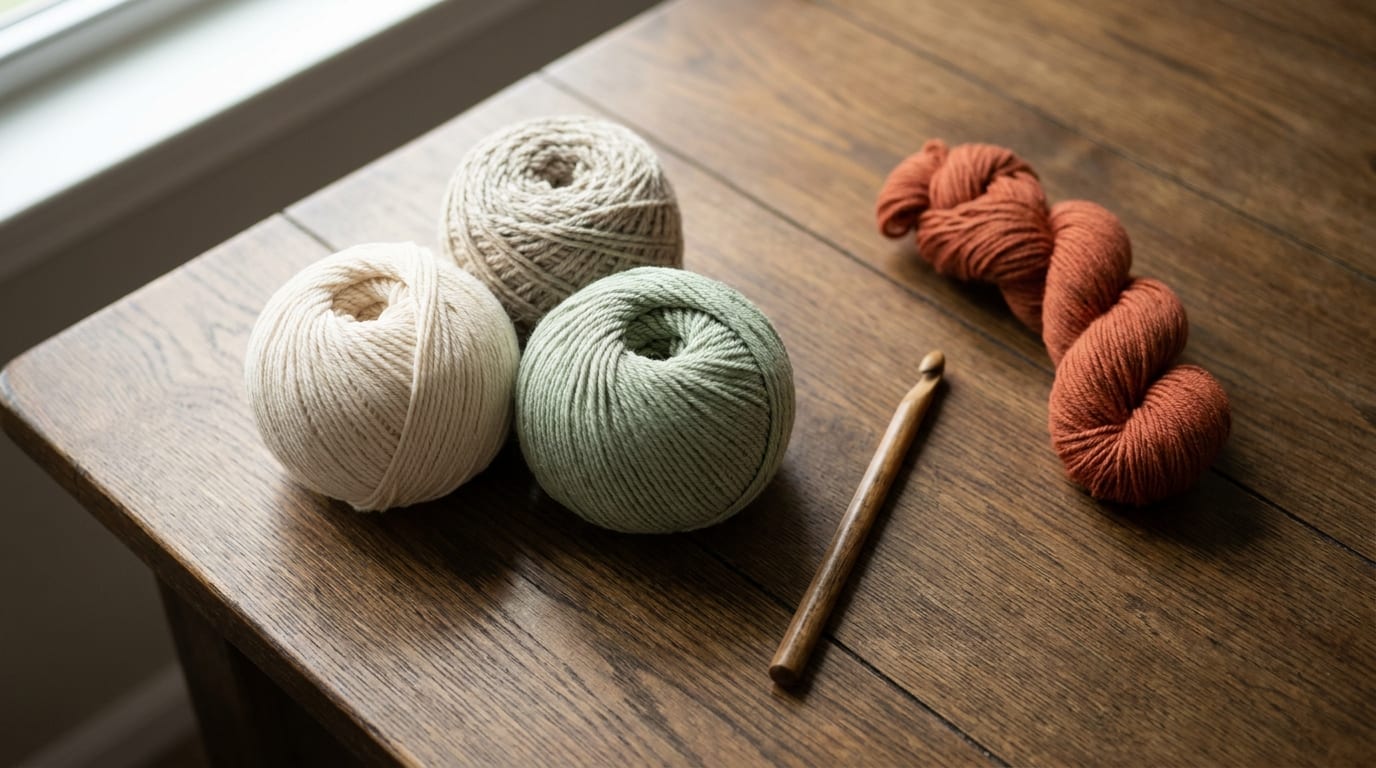
The right crochet yarn for beginners is a smooth, medium yarn in a light, solid color. In yarn terms, that means worsted weight (also labeled CYC 4), spun smooth rather than fuzzy, in cream, oatmeal, or another pale shade. Light color so you can actually see each stitch. Smooth so the stitches are easy to read. Worsted so it pairs cleanly with the 5.0 mm (US size H) hook most starter guides recommend. That single combination removes most of the early frustration before it starts.
The yarn aisle is where a lot of new crocheters stall. There are hundreds of options, the labels are covered in numbers, and the prettiest skeins are often the worst to learn on. This guide cuts through it. By the end you will know which one yarn to reach for, why each property matters, how cotton and acrylic compare for a first project, what to avoid and why, how much to buy, and the exact yarn-plus-hook-plus-project pairing to start with. If you want the wider getting-started picture, our crochet for beginners guide covers the stitches and supplies in full.
Why a smooth, light worsted yarn wins
Three properties make a yarn easy to learn on: color, texture, and weight. Get all three right and your stitches almost read themselves.
Light color, so you can see your stitches
This is the property beginners underrate the most. A crochet stitch is a small structure of loops, and learning means looking at that structure constantly to find where your hook goes next. On a pale, solid yarn, every loop casts a soft shadow and the shape is obvious. On a dark or busy yarn, the shadows disappear and the stitches blur into one mass. Cream, oatmeal, light grey, and soft sage are all kind to new eyes. Save the dramatic colors for when your hands already know the motion.
Smooth texture, so the stitches read clearly
Smooth means the yarn has a clean, even surface with no halo of fluff and no loops sticking out. A smooth plied yarn shows each stitch as a crisp little V, which is exactly what you want when you are still learning to tell one stitch from the next. The fuzzy and textured yarns hide that structure, which we will come back to in the section on what to avoid.
Worsted weight, so it pairs with a common hook
Yarn comes in weights from very fine to very thick, and the weight decides how big your stitches are and which hook fits. Worsted (CYC 4, called aran in the UK) is the sweet spot for learning. The stitches are large enough to see and small enough to feel normal, and worsted pairs cleanly with the 5.0 mm hook nearly every beginner guide starts with, so the yarn and hook do the matching for you. You can read more about it on our worsted weight yarn page.
A quick word on the other weights. Bulky or chunky yarn (CYC 5) is even easier to see and works up faster, so it is a fine second choice if you want big, quick results, but it is less versatile across patterns. At the other end, fingering and lace weight (CYC 1 and 0) are far too fine for a first project, with stitches so small they are hard to see and slow to build. Start at worsted and branch out later. Our yarn weight converter lines up the US, UK, and EU systems so the labels stop being a guessing game.
| Yarn weight | CYC number | US name | UK equivalent | Good for a beginner? | |---|---|---|---|---| | Lace / fingering | 0 to 1 | Lace, sock | 2 to 4 ply | No, too fine | | Light worsted | 3 | DK | DK | Workable, slightly thin | | Worsted | 4 | Worsted | Aran | Yes, the sweet spot | | Bulky | 5 | Bulky | Chunky | Easy and fast, less versatile |
Cotton versus acrylic for your first yarn
Once you are looking at worsted yarn in a light color, the next choice is what it is made of. For a first project the realistic options are cotton, acrylic, or a blend of the two. Both fibers can teach you well, and they teach slightly different lessons.
Cotton shows stitches beautifully. It has a crisp, matte surface, so each stitch sits there sharp and defined, which makes it a clear teacher and the reason a cotton dishcloth is such a classic first make. The catch is that cotton has almost no stretch and is less forgiving. If your tension wanders, cotton shows it plainly and does not spring back to hide the unevenness. It is honest, which is useful, but it can feel a little stiff in the hands at first.
Acrylic is the friendly, low-stakes option. It is inexpensive, widely available, machine washable, soft, and it has a little give. That give matters more than it sounds: when you pull your work out to redo a row, which every beginner does often, acrylic forgives the handling and goes back together without looking tired. A smooth, solid acrylic in a light color is an easy, low-pressure way to start.
If you want the clear stitch definition of cotton with a bit more forgiveness, a cotton-acrylic blend splits the difference nicely, and many of them are sold specifically as easy-care worsted yarns. You can read more about the fiber on our cotton yarn page. There is no wrong answer here. A smooth acrylic or a cotton blend in a pale, solid worsted is a genuinely good place to begin, and either one counts as an easy yarn to crochet with.
What yarn to avoid when you are starting
The prettiest yarns in the shop are often the hardest to learn on. None of these are bad yarns. They are just the wrong teachers for a first project, because they hide the one thing you need to see: the stitch.
- Black or very dark yarn. The single most common beginner regret. On dark yarn the stitches are nearly invisible, you cannot find where your hook goes, and you will strain your eyes hunting for loops. Come back to it once your hands know the motion.
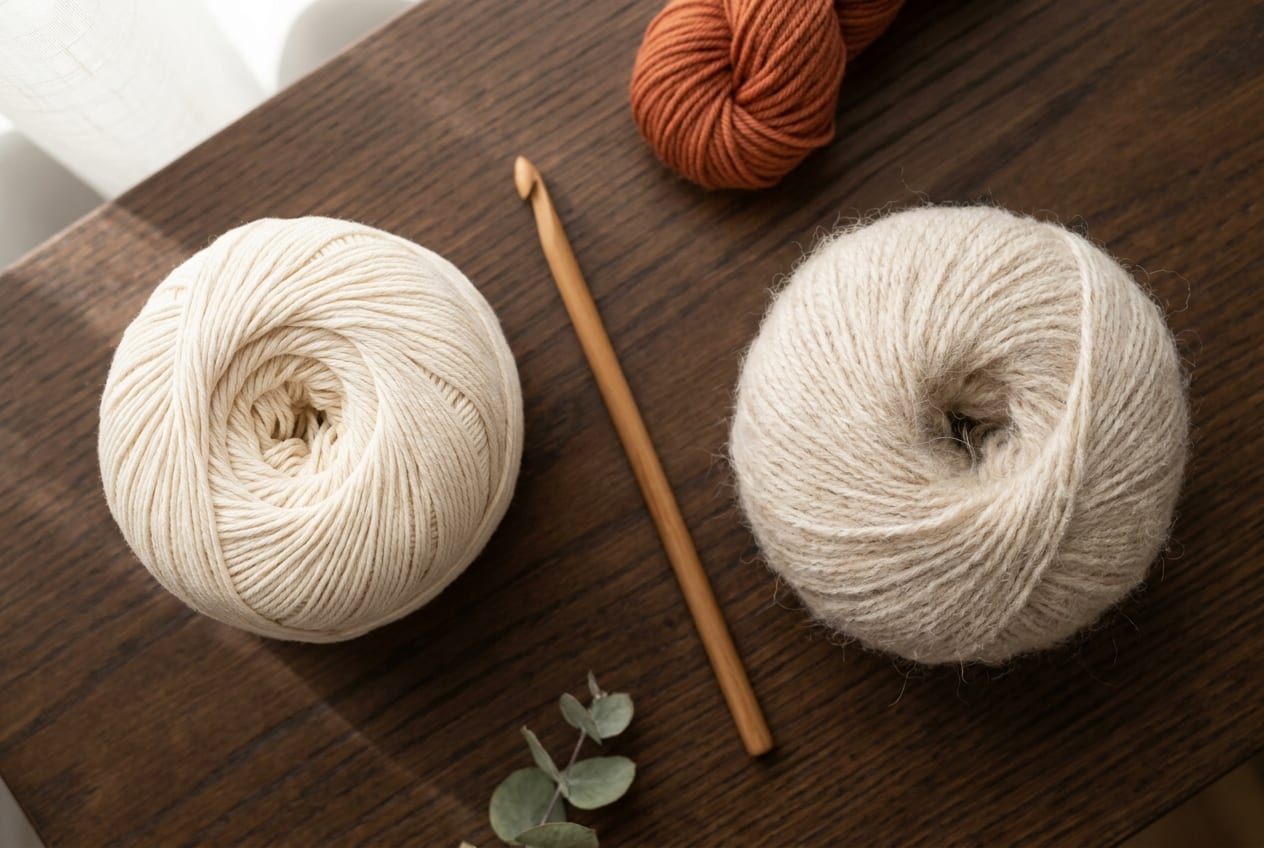
- Fuzzy or fluffy yarns like mohair. That soft halo of fiber is lovely in a finished scarf and a nightmare while learning. The fluff buries the stitch structure completely, so you cannot tell one stitch from the next or see a mistake until it is rows deep.
- Novelty yarns: eyelash, boucle, chenille, and similar. These are textured by design, with loops, bumps, and strands built into the strand itself. They have no readable stitch structure at all, which makes them close to impossible to learn on. Beautiful later, frustrating now.
- Very dark or busy variegated yarn. Variegated yarn changes color along its length. The light, gentle ones are fine eventually, but a dark or high-contrast variegated yarn turns your fabric into visual noise and hides your stitches just as a dark solid would.
- Slippery or splitty plied yarn. Some yarns are loosely plied and split into separate strands when your hook catches only part of them, and very smooth slick yarns slide off the hook. Both add a layer of fight you do not need on day one. A firmly plied, matte worsted behaves itself.
The pattern across all five is the same. Anything that hides the stitch or fights the hook makes learning harder than it needs to be. A smooth, light, solid worsted does the opposite.
How much yarn to buy
You need far less than the wall of skeins suggests. One or two skeins of worsted yarn is plenty to learn the basic stitches and finish a real first project. A standard worsted skein holds roughly 200 yards, and a simple dishcloth uses only about 50 of those, so a single skein covers a dishcloth with plenty left to practice on. A first scarf is the bigger of the two and uses around 200 yards, so one skein covers it with a little to spare, or two if you want a longer wrap and a comfortable margin.
Buy one skein to learn on and a second if you already know you want a scarf. There is no need for a kit, a bag of assorted colors, or a project tote. One or two skeins, a single hook, and you are set for your first several weeks.
Reading just enough of the label
You do not need to decode the whole label to choose well. Two pieces of information do the work.
First, the weight category. Look for the small number on the yarn-weight symbol, usually a little skein icon, or the words worsted or aran. That is the number 4 you are after. Second, the recommended hook size, printed near the weight symbol, which confirms the yarn suits the 5.0 mm hook you are likely starting with. Match those two and the rest of the label, the fiber content, the care symbols, the yardage, is just helpful detail. When the weight names trip you up across US, UK, and EU labels, the yarn weight converter sorts them out.
A first-project pairing that just works
Here is the combination to start with, chosen so every piece supports the others.
- Yarn: one skein of smooth worsted (CYC 4) cotton, or a cotton-acrylic blend, in cream or another pale solid.
- Hook: a 5.0 mm (US size H) hook, the size that pairs cleanly with worsted. Wood or aluminum both work, so pick whichever feels nicer in your hand.
- Project: a single crochet dishcloth (US single crochet equals UK double crochet), worked back and forth into a square.
This pairing is hard to get wrong. The cotton shows each stitch clearly, the pale color keeps the loops visible, the 5.0 mm hook matches the worsted weight, and the dishcloth is just one stitch repeated until you stop thinking about it. Chain about 30 to 35 to set the width, single crochet across, turn, and repeat until the square is as tall as it is wide. You will use well under one skein and most people finish in an evening. When you fasten off, you will see exactly where your tension wandered, which is the whole point of a first project.
When the dishcloth feels easy and you want a next step, our roundup of free crochet patterns sorts projects by skill level so you can climb at your own pace, and the same smooth worsted yarn will carry you through most of the easy ones.
Frequently asked questions
What is the best yarn for beginners learning crochet?
A smooth, worsted weight yarn in a light, solid color, such as cream or oatmeal. Light color makes stitches easy to see, smooth texture makes them easy to read, and worsted weight pairs with the common 5.0 mm hook. A cotton or cotton-acrylic blend in that style is an easy first choice.
Is cotton or acrylic yarn better for a beginner?
Both work well. Cotton shows stitches crisply and is great for dishcloths, but it has no stretch and is less forgiving. Acrylic is cheap, washable, soft, and forgiving when you pull work out and redo it. A smooth acrylic or a cotton-acrylic blend gives you a friendly, low-pressure start.
What yarn should beginners avoid?
Skip black or very dark yarn, since the stitches are nearly invisible. Avoid fuzzy yarns like mohair and novelty yarns like eyelash, boucle, and chenille, which hide the stitch structure completely. Dark variegated yarn and slippery, splitty plied yarns also make learning harder than it needs to be.
What weight of yarn is easiest to crochet with?
Worsted weight (CYC 4, called aran in the UK) is the sweet spot for beginners, with stitches large enough to see and a clean match to a 5.0 mm hook. Bulky yarn is even easier to see and faster but less versatile. Fingering and lace weight are too fine for a first project.
How much yarn do I need to start crocheting?
One or two skeins of worsted yarn is plenty to learn on and make a first project. A standard skein holds about 200 yards. A simple dishcloth uses around 50 yards, so one skein covers it with room to spare, and a first scarf uses about 200 yards, so one skein still covers it.
What color yarn is easiest for a beginner to see stitches?
A light, solid color is easiest, because pale yarn lets each stitch cast a soft shadow so the loops stand out clearly. Cream, oatmeal, light grey, and soft sage all work well. Dark colors and busy variegated yarns blur the stitches together and make it harder to find where your hook goes.