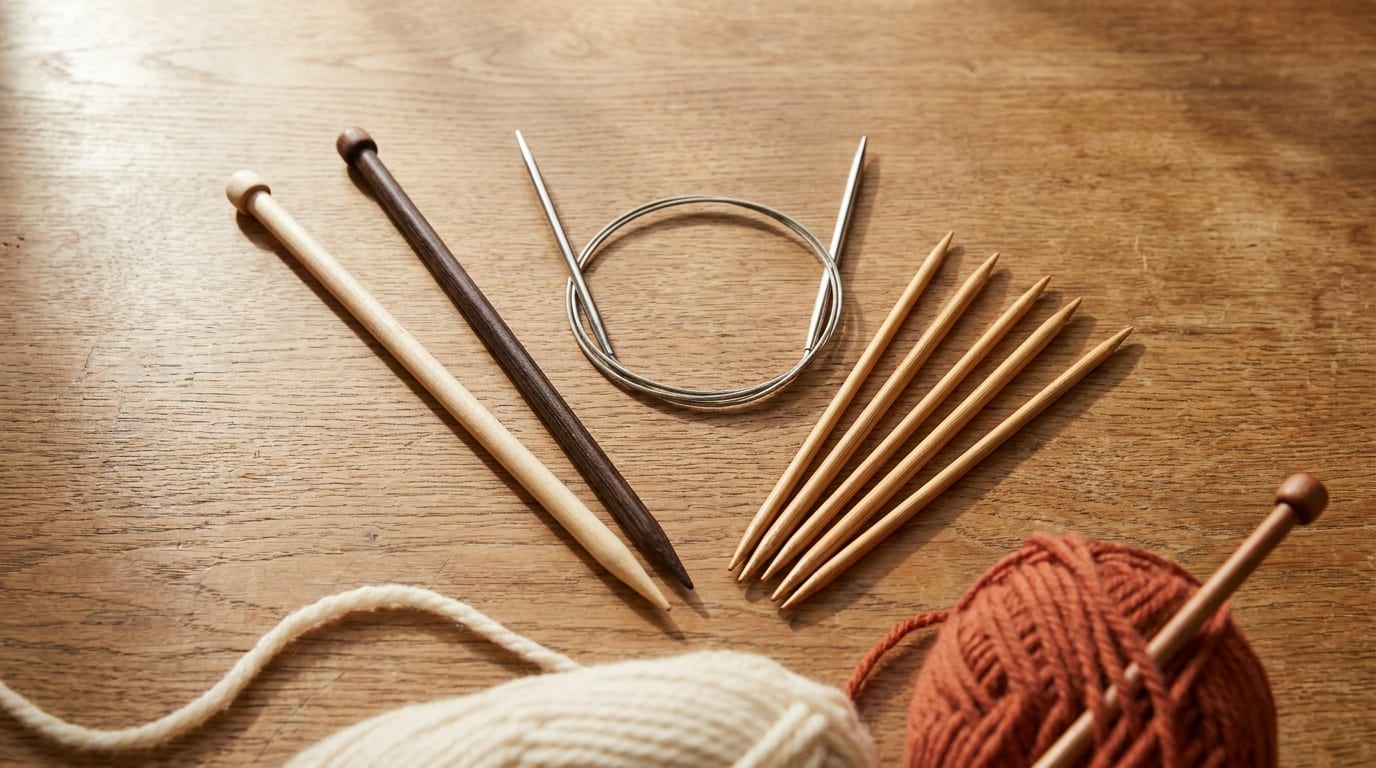
What knitting needles are, and why the right pair matters
Knitting needles are the two smooth shafts that hold your live stitches while you work, looping one continuous strand of yarn into fabric a row at a time. Every knit project rides on them, and the pair in your hands shapes how the whole thing feels: how fast the stitches glide, how often a loop slips off, whether a wide blanket sits comfortably in your lap or fights you at every row. Picking the right knitting needles is less about spending more and more about matching three things to your yarn and your project.
This is a complete reference for anyone choosing knitting needles, from buying a first pair to filling gaps in a growing kit. We will cover the four types and what each one is for, the materials and which yarns they suit, how needle sizes work in millimeters and US numbers (with a clear chart), the lengths to know, and a simple way to choose. There is a beginner recommendation near the end, plus a short note on keeping your needles in good shape.
The four types of knitting needles
There are four kinds of knitting needles, and each one solves a different shape of problem. You do not need all four to start. Knowing what each is for, though, makes every pattern's "you will need" line read clearly instead of looking like a shopping puzzle.
Straight (single-pointed) needles
Straight needles are the classic image of knitting: two separate sticks, each with a point at one end and a stopper or knob at the other. They are sold in pairs and used for knitting flat pieces back and forth, where you turn the work at the end of every row. The stopper keeps stitches from sliding off the back end while the point does the work up front.
They are simple, comfortable to hold, and a fine choice for scarves, dishcloths, and small flat panels. Their one real limit is width. Because all the stitches have to crowd onto one rigid shaft, a wide project like a blanket runs out of room and gets heavy and awkward on a straight needle long before it is finished.
Circular needles
A circular needle is two needle tips joined by a flexible cable. It is the most versatile tool in the kit and the one many knitters reach for by default. You can knit in the round with it (think hats, sweater bodies, and cowls, worked as a continuous tube), and you can also knit flat with it, turning at the end of each row exactly as you would on straights. For anything wide, the cable is the quiet hero: it holds the weight of a large blanket in your lap instead of balancing it all on one stiff stick.
Because they do so much, circulars deserve a guide of their own. Our full breakdown of circular knitting needles covers cable joins, sizing, and the magic-loop method for small tubes.
Double-pointed needles (DPNs)
Double-pointed needles, or DPNs, are short needles with a point at both ends, sold in sets of four or five. You distribute the stitches across three or four of them and knit with the spare, working around in a small tube. They are the traditional tool for socks, sleeves, mittens, and the crown of a hat, where the circumference is too small for a regular circular needle to reach around comfortably.
DPNs feel fiddly the first time, with needles poking out in every direction. The motion settles quickly, and for tight little tubes they remain a reliable, low-cost option.
Interchangeable needles
An interchangeable set is a collection of circular needle tips that screw onto cables of different lengths. One set covers a wide range of sizes and cable lengths from a single case, so instead of owning a dozen separate circulars you assemble the exact one a pattern asks for. They cost more up front than a single needle, but over time they save both money and drawer space, and you stop discovering mid-project that you own every size except the one you need.
Materials, and what each one suits
Knitting needles are made from several materials, and the choice is about more than looks. The surface of the needle decides how readily stitches slide, which in turn decides how well it pairs with a given yarn.
Wood and bamboo are warm to the touch, lightweight, and slightly grippy, so stitches are less likely to slide off when you pause. That grip makes them forgiving for beginners and a steadying partner for slippery yarns like silk, bamboo, or smooth superwash. Lykke and Clover bamboo are two well-known examples of this style.
Metal needles (aluminum, nickel-plated brass, or stainless steel) are smooth and fast. Stitches glide, and the points tend to be sharper, which helps with fine or splitty yarn and with picking up several stitches at once. The speed suits sticky yarns like untreated wool, and it suits knitters who like to move quickly. ChiaoGoo (stainless steel) and Addi (nickel-plated) are familiar names here.
Plastic and acrylic needles are light and inexpensive. They show up most often in large sizes, where a metal or wooden needle would be heavy, and they are a low-risk way to try a chunky project without much outlay.
Carbon fiber needles are light, strong, and a touch grippy, usually finished with metal tips for a sharp point. They aim to combine the warmth and hold of wood with the durability of metal, and they tend to sit at the pricier end.
The rule that ties it together is about friction. Reach for a grippy material (wood or bamboo) when your yarn is slick and prone to sliding, and reach for a slick material (metal) when your yarn is grabby and you want stitches to move. Most knitters end up with a mix and choose by feel once they know which yarn is in their hands.
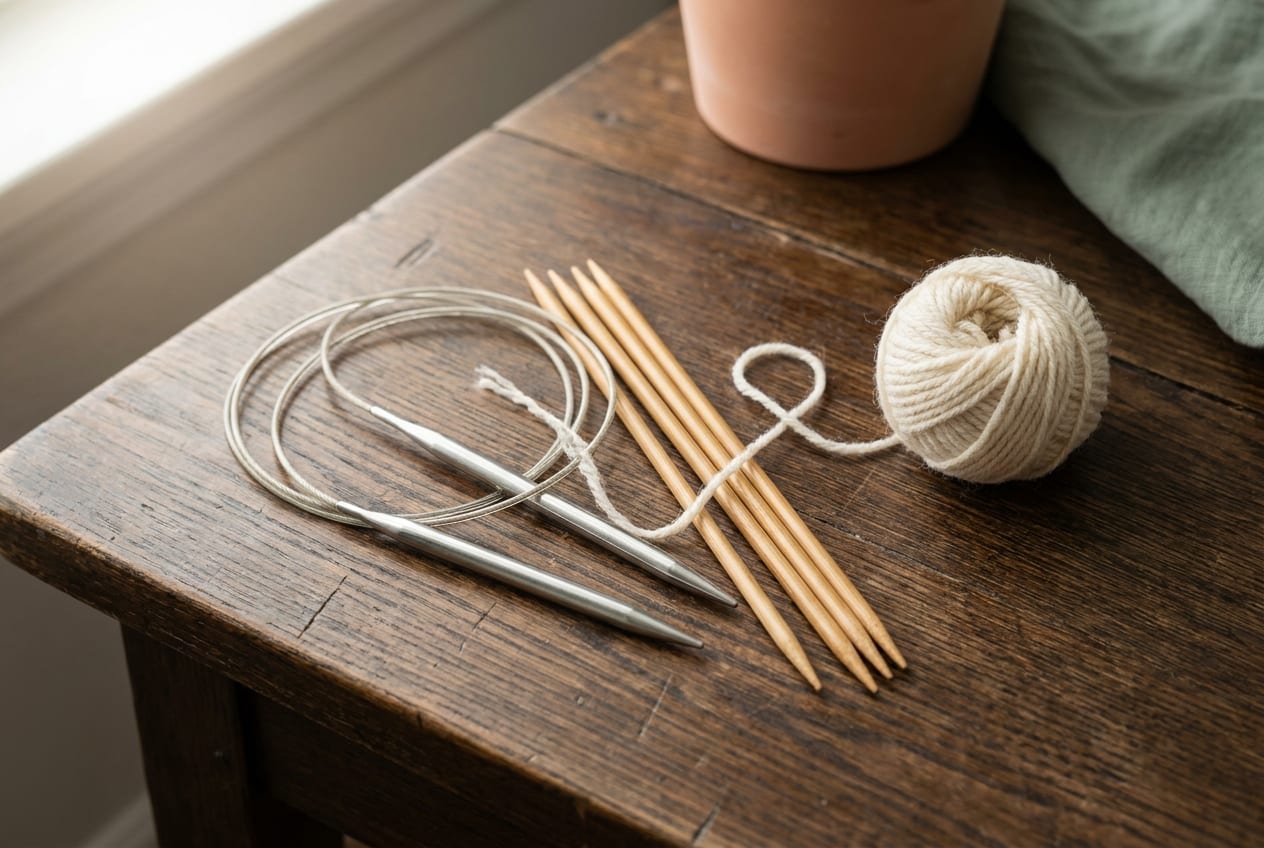
Knitting needle sizes: millimeters vs US numbers
Needle size means the diameter of the shaft, and the diameter is what sets the size of your stitches. The universal, reliable measure is millimeters. Whatever else a label says, the mm figure is the one to trust, because it means the same thing everywhere in the world.
On top of that sit two numbering systems that can confuse a beginner. The US system labels needles with numbers that climb as the needle gets thicker, from US 0 (about 2.0 mm) up to US 50 and beyond for very large needles. A separate older UK and metric system runs its numbers the opposite way, so a higher UK number is a thinner needle. Two systems pointing in opposite directions is exactly why the advice is always the same: go by the millimeters, and treat the number as a label, not a measurement.
Here is a chart of common sizes mapping metric (mm) to the US number. Where the US system does not land on a single clean value, a small range is noted.
| Metric (mm) | US size | |---|---| | 2.0 mm | US 0 | | 3.0 mm | US 2 to 3 (approx) | | 3.5 mm | US 4 | | 4.0 mm | US 6 | | 4.5 mm | US 7 | | 5.0 mm | US 8 | | 5.5 mm | US 9 | | 6.0 mm | US 10 | | 6.5 mm | US 10.5 | | 8.0 mm | US 11 | | 9.0 mm | US 13 | | 10.0 mm | US 15 |
A few sizes do not line up tidily between systems, which is the whole reason the mm value wins. If a US pattern and a UK pattern both call for "size 8," they mean entirely different needles unless you check the millimeters. When you substitute or shop across regions, match the mm first and let the rest follow. Our full knitting needle size chart adds the UK and Canadian numbers alongside the metric and US sizes, plus the yarn weight each needle suits.
Needle and cable lengths
Length is the other measurement on the label, and it matters more than beginners expect. Straight needles commonly come in 10 inch and 14 inch lengths. A 10 inch pair is tidy for narrow work like a dishcloth, while a 14 inch pair holds more stitches for a wider scarf or shawl.
Circular needles are sized by their total length, tip to tip including the cable, in common lengths of 16, 24, 32, and 40 inches. The guideline is to match the cable length roughly to the circumference of what you are knitting in the round. A 16 inch circular suits a hat, a 24 inch suits a cowl or a small sweater body, and a 32 or 40 inch suits a large garment or a blanket. If the cable is much longer than the project's circumference, the stitches will not stretch around it comfortably, which is when knitters turn to the magic-loop method or to DPNs instead. For flat knitting, a longer circular is rarely a problem, since the cable simply holds the extra width.
How to choose your knitting needles
Choosing comes down to three matches, made in this order.
- Match the size to your yarn. Every yarn ball band suggests a needle size, and that is your starting point. From there, your own tension may want a size up or down, which is what a gauge swatch tells you. If you are working from a yarn you already own, our yarn weight converter lines up US, UK, and EU weight names and their typical needle sizes, and the gauge calculator helps you dial the size in once you have knit a small square.
- Match the material to the yarn. Grippy wood or bamboo for slick yarn, slick metal for grabby yarn. When in doubt with an unfamiliar yarn, wood is the safer, calmer choice.
- Match the type to the project. Circulars for blankets and anything worked in the round, DPNs or a long circular for socks, straights for small flat pieces.
For a first set, a mid-size wood or bamboo circular somewhere around 4.5 to 5.5 mm (US 7 to 9) is a friendly choice. That size pairs cleanly with the most common beginner yarn, the gentle grip of wood keeps stitches from sliding off while your hands learn the motion, and a circular can knit both flat and in the round, so a single needle carries you from a first scarf to a first hat. If you would rather have the whole gentle walkthrough of those first rows, our guide to knitting for beginners covers casting on, the knit stitch, and reading a pattern, and the wider overview of what knitting is sets the scene. You can find plenty of "best knitting needles" lists online, but for a first project the simple wood circular above is hard to beat for the price.
Caring for and storing your needles
Knitting needles last for years with very little fuss. A few small habits keep them smooth and findable.
Wipe wooden and bamboo needles with a dry cloth now and then, and if a tip ever feels rough, a light pass with very fine sandpaper followed by a tiny drop of beeswax or wood conditioner brings the glide back. Keep metal needles dry so they do not pick up spots, and check the screw joins on circulars and interchangeable sets occasionally, since a loose join can snag yarn. Use the little key that comes with interchangeable sets to tighten tips firmly onto cables before each project.
For storage, the goal is simply to keep pairs together and tips protected. A fabric needle roll, a zippered case, or even a tall jar for straights all work. Interchangeable sets usually arrive in their own organized case, which is part of what makes them so tidy to live with. Coil circular cables loosely rather than folding them sharply, and a quick dip of the cable in warm water relaxes any kinks before you cast on.
Frequently asked questions
What knitting needles are best for beginners?
A mid-size wood or bamboo circular around 4.5 to 5.5 mm (US 7 to 9) is the friendliest first choice. Wood grips the yarn slightly so stitches are less likely to slide off, the size pairs with common worsted yarn, and a circular knits both flat and in the round, so one needle covers your first scarf and your first hat.
What are the different types of knitting needles?
There are four. Straight (single-pointed) needles are sold in pairs for flat knitting. Circular needles join two tips with a cable and work both flat and in the round. Double-pointed needles (DPNs) handle small tubes like socks. Interchangeable sets give you screw-on tips and cables in many sizes from one case.
How do knitting needle sizes work?
Needle size is the diameter of the shaft, measured in millimeters, and the mm value is the one to trust everywhere. The US system numbers climb as needles get thicker (US 0 is about 2.0 mm), while an older UK and metric system runs the opposite way, so a higher UK number is thinner. Always match the millimeters when you shop or substitute.
Should I use wood or metal knitting needles?
It depends on your yarn. Wood and bamboo are grippy, so they suit slick yarns like silk or smooth superwash and are forgiving for beginners. Metal is fast and smooth, which suits sticky yarns like untreated wool and knitters who like speed. The rule: grippy needle for slick yarn, slick needle for grabby yarn.
What size knitting needles do I need for my yarn?
Start with the size printed on the yarn ball band, then adjust to your own tension with a gauge swatch. Worsted weight (UK aran) usually wants about 4.5 to 5.5 mm, DK a touch smaller, and bulky larger. Our yarn weight converter and gauge calculator help you confirm the size before you cast on.
Can I use circular needles instead of straight needles?
Yes. Circular needles knit flat pieces just as well as straights, since you simply turn the work at the end of each row like normal. They also knit in the round, and the cable holds the weight of wide projects in your lap. Many knitters use circulars for nearly everything and keep straights only for small pieces.