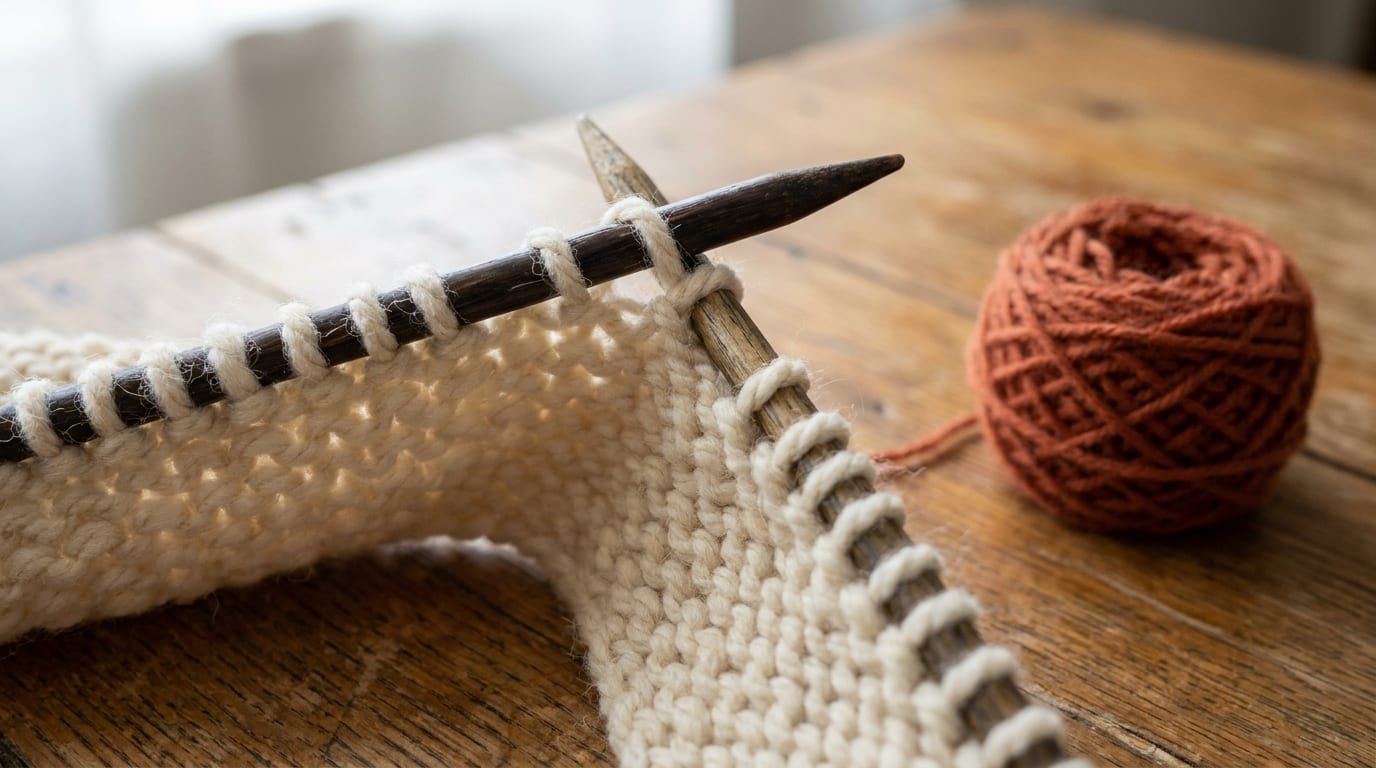
The decrease you reach for on a purl row
Most knitters meet SSK first and feel good about it. Then a pattern says "SSP" on a wrong-side row and the confidence wobbles. Slip slip purl, usually written SSP, is just the purl-side version of the same idea: a clean, left-leaning decrease, worked while you are purling instead of knitting.
You need it whenever shaping happens on a purl row, or whenever you want a left-leaning decrease to stay consistent on both the knit and purl rows of a pattern. This guide covers what SSP means, the step-by-step method, how it mirrors SSK and p2tog, and the fixes for the tight or twisted SSP that trips people up.
New to purling at all? Our calm introduction to knitting walks through the knit and purl stitches first. If you already know SSK, this will feel familiar, because SSP is its quiet twin. Our SSK decrease tutorial is the knit-row companion to this one.
What SSP means
SSP stands for slip, slip, purl. Like SSK, it is a decrease that turns two stitches into one. The difference is that you work it on a purl row, with the wrong side of the fabric facing you. When you turn the work back to the right side, the decrease leans to the left, exactly matching an SSK.
That matching is the whole point. If a shaping line runs up through both knit and purl rows, you use SSK on the knit rows and SSP on the purl rows so the line of decreases leans the same way the whole way up. Mix them up and the lean flips every other row, which looks messy.
How to work SSP step by step
Work these steps on a purl row, with the wrong side of the fabric facing you.
- Slip the first stitch knitwise from the left needle to the right needle. Insert the right needle as if to knit, then just slide the stitch over unworked.
- Slip the second stitch knitwise the same way. Both stitches now sit on the right needle with their legs reoriented.
- Slip both stitches back onto the left needle, keeping their new orientation. Do not untwist them.
- Bring the working yarn to the front, as you normally would to purl.
- Insert the right needle into the back loops of both stitches at once, going from left to right behind the work. This is the awkward part, so rotate the needle until it slides through both back loops.
- Purl the two stitches together and slip them off. One stitch remains, and on the right side of the fabric it leans to the left.
The double slip and the purl through the back loops are what reorient the stitches so the finished decrease mirrors an SSK.
SSP, SSK, and p2tog: how they fit together
It helps to see the family of decreases in one place.
| Decrease | Row | Leans | Mirror of | |---|---|---|---| | SSK | Knit row | Left | k2tog | | SSP | Purl row | Left | p2tog | | k2tog | Knit row | Right | SSK | | p2tog | Purl row | Right | SSP |
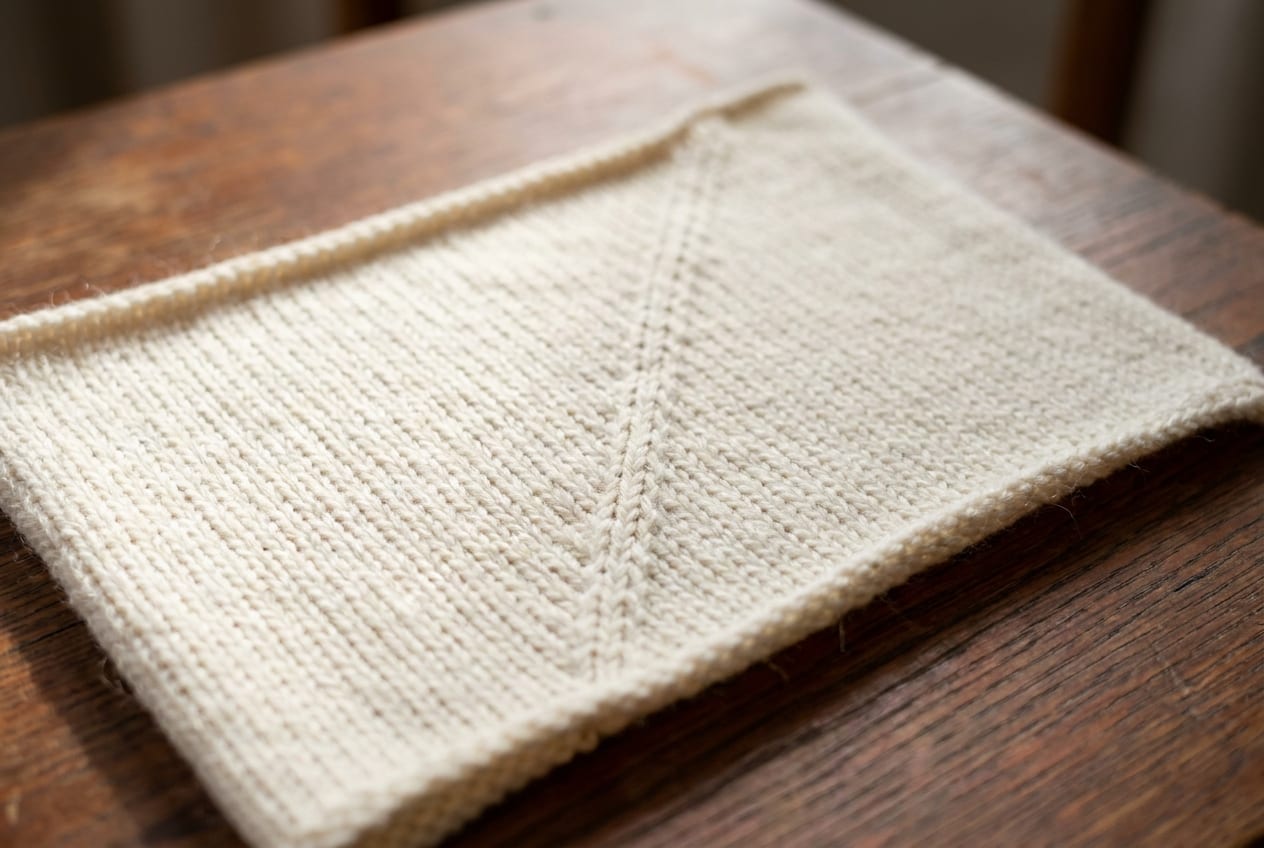
Read it this way: SSK and SSP both lean left, on opposite rows. K2tog and p2tog both lean right, on opposite rows. So when a pattern wants a left-leaning line that crosses both knit and purl rows, it pairs SSK with SSP. When it wants a right-leaning line, it pairs k2tog with p2tog.
On a chart, a left-leaning decrease carries the left-slant symbol whether it falls on a knit row (SSK) or a purl row (SSP). The chart shows the lean as it looks from the right side, so the symbol stays the same and you just work it as an SSP when the row is a purl row.
Where you will use SSP
You reach for SSP whenever a left-leaning decrease has to land on a purl row. That happens more often than beginners expect:
- Flat lace worked back and forth. Many lace charts have decreases on both the right-side and wrong-side rows, so a left-leaning column needs SSK on the knit rows and SSP on the purl rows.
- Shaping worked from the wrong side. Some sleeve caps, shawl edges, and necklines decrease on purl rows, and SSP keeps those edges mirrored.
- Reversible and textured pieces. When the wrong side shows in the finished item, a tidy SSP matters as much as a tidy SSK.
If your pattern only ever decreases on knit rows, you may not need SSP often. The moment it shapes on a purl row and wants a left lean, this is the stitch.
An easier alternative if SSP fights you
The standard SSP is the cleanest, but the purl-through-the-back-loops step is genuinely fiddly. If it keeps fighting you, there is a gentler route to a similar left lean. Slip the first stitch knitwise, slip it back to the left needle, then purl that stitch together with the next one through their back loops. It puts less strain on the yarn and is a little easier on the hands. The lean is close to the standard SSP, so it works well in shaping. For crisp, symmetric lace, learn the full SSP, since the match with SSK is exact.
Three common SSP mistakes
Forgetting to slip the stitches back
The slips put the stitches on the right needle, but you purl from the left needle. If you try to purl them straight off the right needle the orientation is wrong. Always slip both stitches back to the left needle before you purl them together.
Slipping purlwise
As with SSK, slip the stitches knitwise, not purlwise. Slipping purlwise twists the stitches and the decrease comes out lumpy and tight.
Fighting the back-loop purl
Purling two together through the back loops is genuinely awkward the first few times, and the stitches feel tight. Work them loosely, use needles with a smooth, pointed tip, and do not yank. If it still fights you, an alternative that gives a similar left lean is to purl two together through the back loop of the second stitch only. Learn the standard SSP first, then explore alternatives.
Frequently asked questions
What does SSP mean in knitting?
SSP stands for slip, slip, purl. It is a decrease worked on a purl row that turns two stitches into one. After slipping two stitches knitwise and returning them to the left needle, you purl them together through the back loops, which makes the decrease lean left on the right side of the fabric.
Is SSP the purl version of SSK?
Yes. SSP is the purl-row counterpart of SSK. Both produce a left-leaning decrease. Patterns pair SSK on knit rows with SSP on purl rows so a left-leaning shaping line stays consistent the whole way up.
What is the difference between SSP and p2tog?
Both decrease two stitches into one on a purl row. SSP leans to the left and is worked through the back loops after slipping and returning the stitches. P2tog leans to the right and is a simple purl two together through the front loops. They mirror each other on opposite edges.
Why is my SSP so tight?
Purling two together through the back loops naturally pulls the stitches snug. Work them loosely, use a needle with a smooth pointed tip, and avoid yanking the yarn. Blocking the finished piece will even out the tension along the decrease line.
Do I slip the stitches knitwise or purlwise for SSP?
Slip both stitches knitwise, the same as for SSK, unless your pattern says otherwise. Slipping knitwise reorients the stitches correctly. Slipping purlwise twists them and gives a lumpy, tight decrease.
Pinterest pin headlines (internal reference, strip before publish)
- A: "Slip Slip Purl (SSP) Made Simple"
- B: "SSP: The Purl-Side Twin of SSK"
- C: "Left-Leaning Decreases on Every Row"